
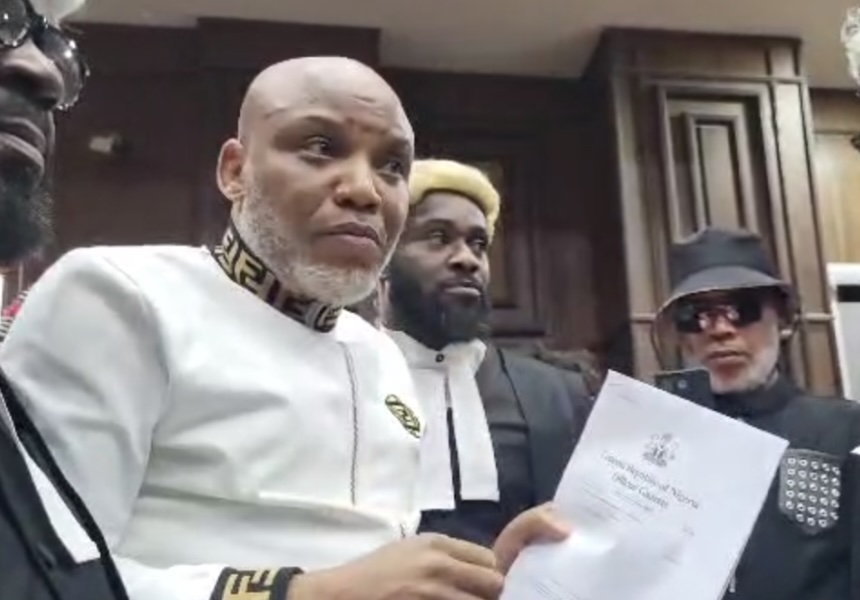
The Federal High Court in Abuja has scheduled November 20 for the judgment in the trial of Nnamdi Kanu, leader of the Indigenous People of Biafra, who faces terrorism charges. Kanu’s defense was foreclosed after he refused to mount a defense under a law that has since been repealed. Justice Binta Nyako, who presided over the case, noted that the court had offered Kanu the constitutional right to defend himself under Section 36. Because Kanu insisted on not proceeding under the repealed statute, the court concluded that he had waived his right to a defense. “This court has given opportunity to the defendant under Section 36 as required by the constitution, and I will not allow this to continue,” the judge said.
Kanu is charged with terrorism, a serious offense under Nigerian law, and the case has attracted considerable attention due to the sensitive nature of the allegations and the controversy surrounding the Indigenous People of Biafra, a group proscribed by the Nigerian government. The prosecution has presented its case, while the defense’s refusal to use the repealed law effectively closed its arguments, clearing the way for the court’s verdict.
The November 20 judgment will mark the culmination of a high‑profile trial with significant implications for the rule of law and the administration of justice in Nigeria. Human‑rights organizations, legal experts, and the international community will be watching closely to see how the Nigerian judiciary handles this politically and security‑sensitive case. As the Federal High Court in Abuja prepares to deliver its verdict, all eyes remain on the outcome of this closely watched trial.




Comments are closed for this story.