
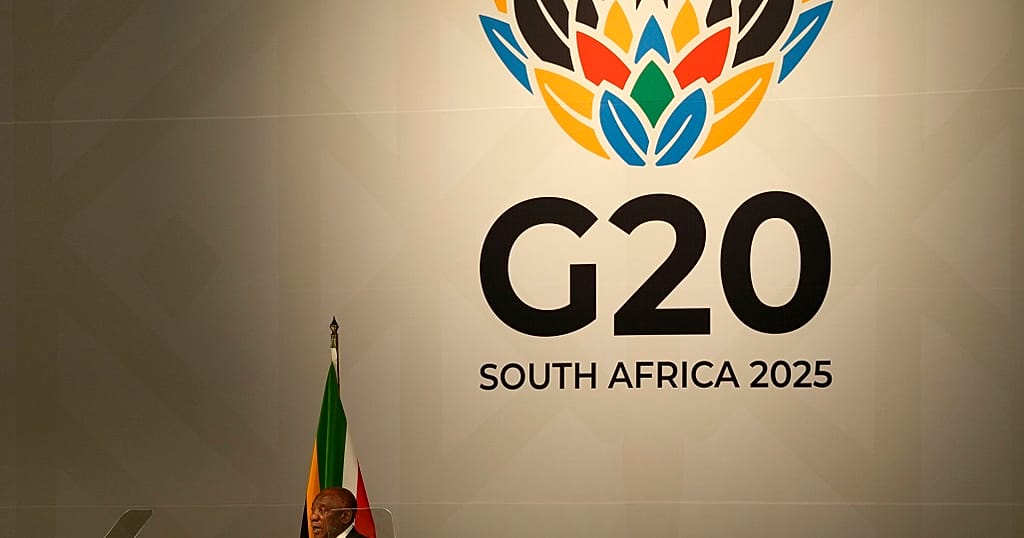
The United States has announced that it will not attend the upcoming G20 summit in South Africa, citing concerns about the treatment of white farmers in the country. President Donald Trump made the announcement on his social‑media platform, stating that no U.S. officials, including Vice President JD Vance, who had been slated to participate, would be present.
Trump’s decision follows his earlier comments about alleged “abuses” suffered by Afrikaners in South Africa, such as violence, death and land seizures. The South African government has consistently denied these allegations. President Cyril Ramaphosa said he personally told Trump that the claims of discrimination and persecution are “entirely untrue.” South African officials noted that, more than three decades after apartheid, white South Africans generally enjoy a higher standard of living than the black majority, and expressed surprise at the accusations.
The boycott adds to a series of diplomatic clashes between the Trump administration and South Africa, which have included disagreements over diversity, climate change and, earlier this year, Secretary of State Marco Rubio’s refusal to attend a G20 foreign‑ministers meeting because of its agenda. The administration has also linked its refugee policy to the issue, suggesting that most of the sharply reduced annual refugee intake of 7,500 would be white South Africans fleeing what it calls discrimination.
The diplomatic dispute has significant implications for international relations and global cooperation. The G20 summit is a key forum for world leaders to discuss economic development, trade and climate change, and the U.S. withdrawal is likely to be seen as a setback for those efforts, potentially straining ties between the two countries. Despite the boycott, the South African government has reiterated its commitment to hosting a successful summit. As the international community prepares for the gathering, attention will focus on the impact of the U.S. withdrawal and the broader consequences for global cooperation and governance.



Comments are closed for this story.