
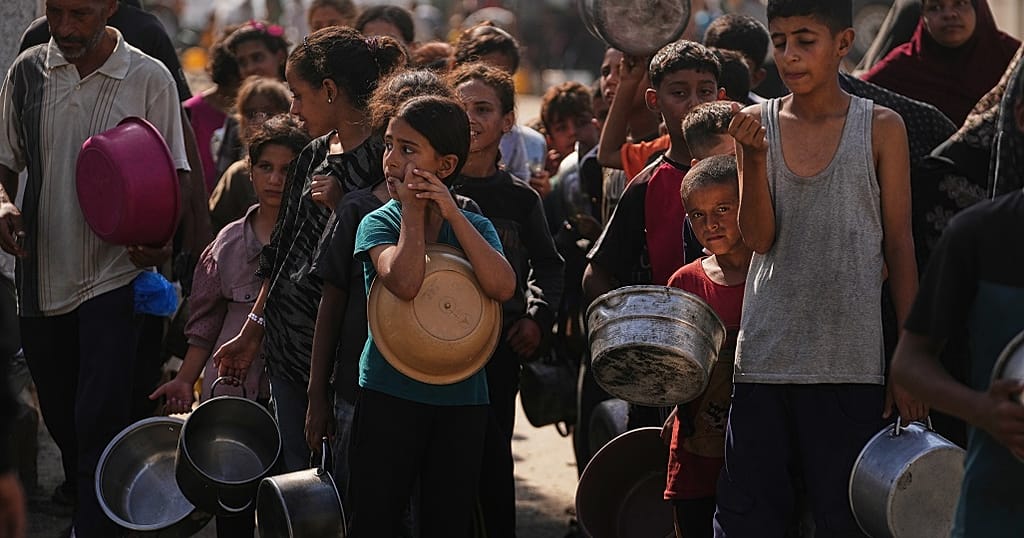
In the aftermath of the recent conflict, the Nuseirat refugee camp in Gaza faces a severe economic crisis that leaves many without access to basic necessities. Although a ceasefire has halted the violence, the population’s economic struggles persist, forcing many to rely on charity kitchens for their only guaranteed meal of the day. Long lines of people—mostly children—wait to receive a simple rice dish from a communal pot, underscoring the devastating impact of the crisis on the community’s well‑being.
Mohamed al‑Naqlah, a camp resident, describes the situation: “The increasing living costs have been the hardest weapon used against us,” as families are left without income or employment. For Mohamed Jedely, a father of three, charity kitchens are not a temporary aid but a vital lifeline. He explains that “there is currently no other alternative” because market prices for food and essentials have skyrocketed.
The struggle is evident on the faces of the children who walk away with filled pots, their expressions marked by exhaustion and despair. While the international community has provided some humanitarian aid to the Gaza Strip since the truce began, the amount falls far short of the overwhelming need. Consequently, communities remain perilously dependent on the generosity of others for their next meal.
The United Nations and other humanitarian organizations have warned of a looming food crisis, emphasizing the need for sustained support to address the underlying causes of poverty and unemployment. Gaza’s economic crisis is rooted in years of conflict, blockade, and restrictions on movement and trade, and the recent violence has only worsened the situation, leaving many without basic services such as healthcare and education. As the international community continues to respond, it is essential to tackle the root causes of poverty and unemployment and provide sustainable solutions to support Gaza’s recovery and development.




Comments are closed for this story.