
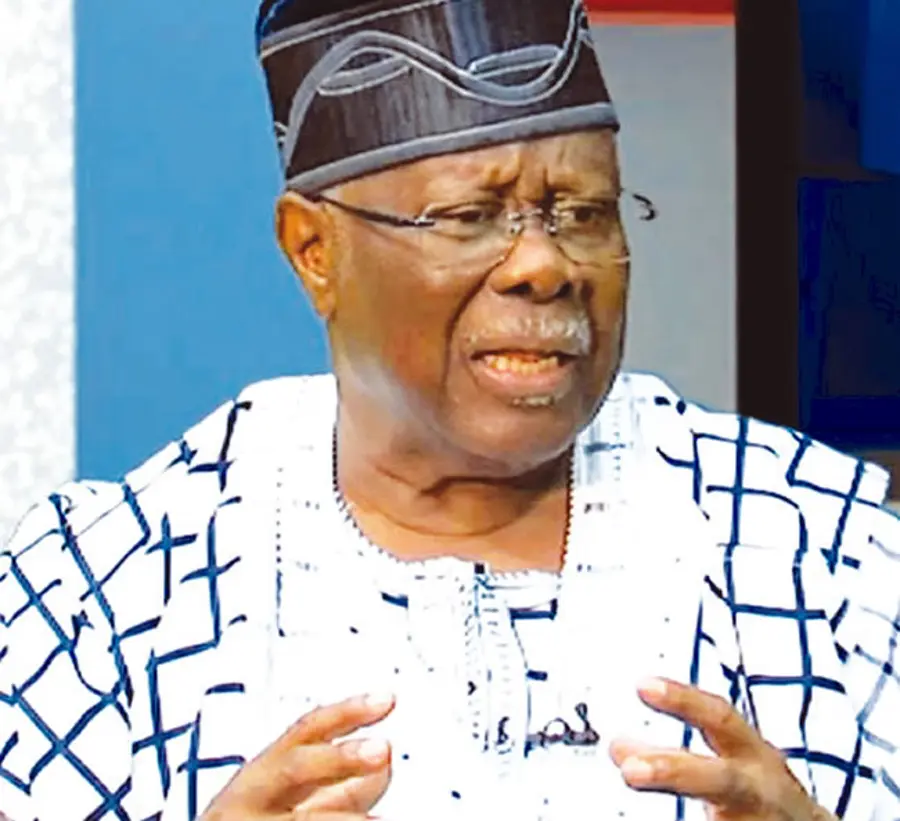
Chief Bode George, a prominent figure in the Peoples Democratic Party, has attributed Nigeria’s persistent divisions to the lingering effects of colonialism, specifically tribalism and religious bigotry. In a recent interview on Arise Television’s Morning Show, he discussed the government’s decision to grant a posthumous state pardon to nationalist Herbert Macaulay, who had been twice convicted by colonial authorities. The pardon, issued by President Bola Tinubu as part of a broader gesture of mercy to 175 individuals, was rejected by Macaulay’s family. George said that while the government’s actions are its prerogative, Nigerians ultimately must judge those decisions. He emphasized that the nation should focus on progress rather than dwelling on past grievances.
George identified tribalism and religious bigotry as the “two evils” planted by British colonial rule, noting that these issues continue to underlie many of Nigeria’s conflicts and tensions. To illustrate religious tolerance, he cited his own family: his eldest sister is a Muslim, and he has supported her religious activities. He stressed the importance of loving one’s neighbor regardless of faith, a principle found in both Christian and Islamic teachings.
Describing the ongoing divisions as “existential imbecilities,” George warned that they distract from the essential task of governing effectively. By acknowledging the colonial legacy that has contributed to these fractures, he hopes to promote greater understanding and unity among Nigerians. The longstanding challenge of religious and ethnic tensions in Nigeria underscores the need for continued efforts to address these underlying issues as the country moves forward, with both government and citizens working together to build a more inclusive and harmonious society.


Comments are closed for this story.