
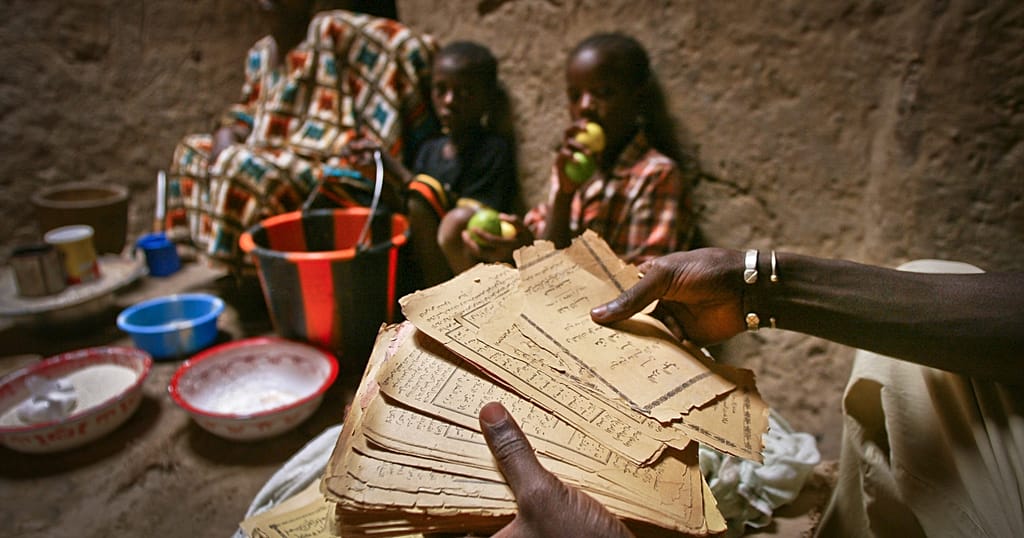
In Timbuktu, a city renowned for its rich cultural heritage, the Ahmed Baba Institute is painstakingly preserving ancient manuscripts that hold the secrets of West Africa’s past. Staff members are meticulously photographing and scanning these fragile texts—some dating back hundreds of years—to safeguard the knowledge they contain. This work is crucial because many of the manuscripts are the only surviving records of their kind, offering insights into the region’s history, medicine, law and astronomy.
Thirteen years ago, when al‑Qaida‑connected fighters invaded the city, the institute’s staff and local families embarked on a daring mission to smuggle tens of thousands of manuscripts to safety in Bamako. After extensive digitisation, most of those precious texts have been returned to Timbuktu. Dr Mohamed Diagayaté, the institute’s general director, emphasizes their significance, noting that they contain “a lot of historical information about the area… that cannot be found anywhere else.” The collection includes medical texts, legal rulings and astronomical notes, testifying to the region’s scholarly tradition. Some manuscripts even record debates on the morality of smoking tobacco and the importance of reducing dowries to enable poorer men to marry.
The institute’s staff and local scholars are working tirelessly to catalogue, preserve and teach the next generation about these valuable documents. Yet many manuscripts remain in family libraries across Timbuktu, stored in traditional wooden chests. Some families face financial hardship, raising concerns that private sales could endanger the collection. Sane Chirfi Alpha, a founding member of the nonprofit SAVAMA DCI, notes that “the families that hold the manuscripts are in a difficult situation and receive no support,” making them vulnerable to selling these precious texts.
Despite these challenges, the Ahmed Baba Institute remains committed to its mission. It is training new specialists, such as 24‑year‑old Baylaly Mahamane, who aspires to become a manuscript specialist, unlock the secrets of the ancient texts and share his knowledge with others. Security continues to be a concern, with some researchers hesitant to travel to the region because of armed groups.
As Timbuktu prepares to celebrate the Prophet Muhammad’s birth, the city’s residents are reminded of the manuscripts’ significance as an integral part of their cultural heritage. The institute’s efforts to preserve and digitise these texts are essential for ensuring that this written record of West African history remains accessible to future generations. Ongoing conservation and training at the Ahmed Baba Institute aim to secure the future of these precious manuscripts, recognizing their importance as a testament to the region’s rich scholarly tradition and cultural fabric.




Comments are closed for this story.