
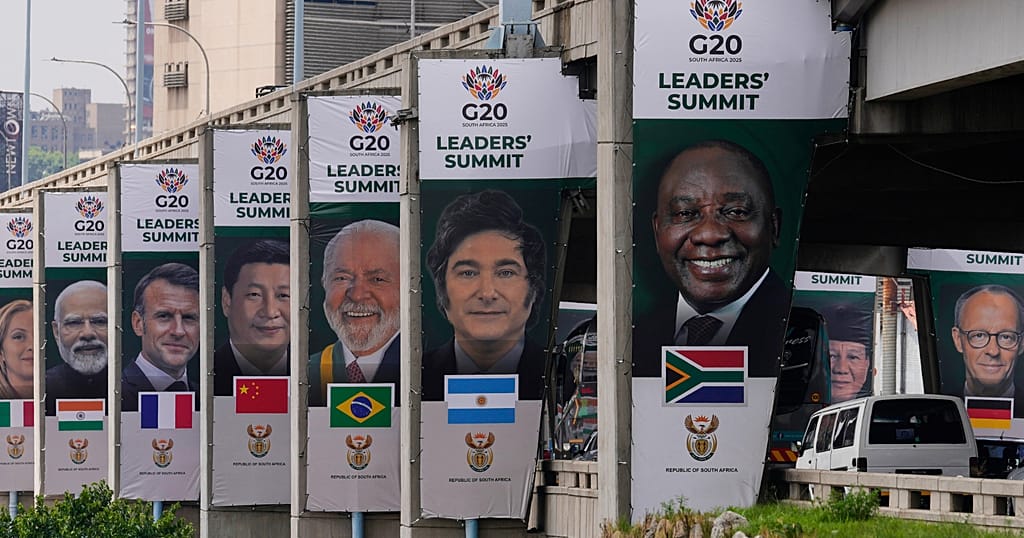
The United States has reaffirmed its decision not to participate in the G20 summit currently underway in Johannesburg, South Africa. Although South African President Cyril Ramaphosa suggested the possibility of a change of heart, the White House confirmed that the United States will send only a diplomatic delegation to attend the hand‑over ceremony at the end of the event. That ceremony will mark the transition of the G20 presidency to the United States, which is slated to host next year’s summit at President Donald Trump’s golf club in Doral, Florida.
The U.S. boycott stems from President Trump’s claims of violent persecution of white Afrikaner minority farmers in South Africa—allegations that have been widely disputed. This is the latest in a series of criticisms Trump has leveled against South Africa since returning to office. In May, Trump held a tense meeting with President Ramaphosa at the White House, confronting him with unsubstantiated claims of widespread violence against Afrikaners.
President Ramaphosa has stressed that the summit will issue a joint declaration despite U.S. pressure to avoid one. A South African G20 official disclosed that the United States advised against adopting a declaration because the absence of an American delegation would prevent consensus. Instead, the U.S. prefers a toned‑down statement from South Africa to conclude the summit. Ramaphosa expressed regret over the U.S. absence but vowed that participating nations “will not agree to be bullied.” Other leaders, including German Chancellor Friedrich Merz, have voiced hope for a joint declaration, though the outcome remains uncertain.
South Africa, the first African nation to hold the G20 presidency, aims to advance issues affecting poor countries—such as climate‑change mitigation, debt relief, and global wealth inequality. The European Commission and European Council have voiced support for South Africa’s agenda. The United States has previously disparaged those priorities; Secretary of State Marco Rubio skipped a G20 foreign‑ministers meeting in February and dismissed the agenda as focused on diversity, equity, inclusion, and climate change.
While other leaders, including Chinese President Xi Jinping and Russian President Vladimir Putin, are also skipping the summit, they have sent delegations to represent them in the talks. According to a South African ambassador, the United States is the only country not participating in the discussions. The summit’s outcome and the implications of the U.S. boycott will be closely watched in the coming days.

Comments are closed for this story.