

Since the Independent National Electoral Commission announced the Nigerian presidential election results, I posted a tweet from my handle @EboeOsuji. My message was driven by the deep disappointment felt by the 14.4 million voters who did not support President‑elect Asiwaju Bola Tinubu, even as he and his supporters celebrated victory. I invoked Robert Kennedy’s words, “Democracy is messy and it’s hard. It’s never easy,” and cited American political strategist Richard Galen, who agreed that “Democracy is messy…whether you’ve been doing it since 1789 or whether you’re doing it for the first time in 2005. The trouble with democracy is, you hold elections. The trouble with dictatorships is…you don’t.” I added my own observation that the real problem is that only one person can be declared the winner of any contested seat, while others who worked just as hard—or harder—must endure the depressing feeling of defeat.
I expressed sympathy for those experiencing this disappointment in the Nigerian presidential election and urged them to accept the declared result for the sake of the country they love. By doing so, they would be performing the most important public service possible in these delicate moments. Some will argue that the messiness of democracy lies in the inevitable irregularities of elections, whether in the United States or Nigeria. Comparing the frequency or scale of such irregularities across countries is unhelpful. Others claim that because electoral irregularities are inevitable, the losing side can never view an election as free and fair. This perspective suggests that only the declared winners celebrate, regardless of the margin of victory.
INEC reported that Tinubu received 8.7 million votes, Atiku Abubakar 6.9 million, Peter Obi 6.1 million, and Rabiu Kwankwanso 1.4 million. Naturally, only Tinubu and his supporters are pleased with these numbers. If the vote distribution remained the same but the candidates’ names were swapped, Abubakar, Obi or Kwankwanso and their supporters would be jubilant with 8.7 million votes, while Tinubu’s camp would claim irregularities. Thus, any presidential election will leave millions of Nigerians dissatisfied—a primary reason democracy feels messy and unsatisfactory.
Winston Churchill observed that “democracy is the worst form of government except for all the others that have been tried.” Perhaps Switzerland offers a better way to manage the messiness of electoral power. In Switzerland, no single individual is identified as “the” President; instead, the Swiss Federal Council—seven members—rotates the presidency annually. This diffusion of power emphasizes sharing rather than concentrating authority. Nigerians (and Americans) might consider a similar approach, though for now we must work within our existing system.
We should remember how Nigerians feel when the Super Eagles lose important matches—a heartbreak familiar to all. The same feeling gnaws at us when the election return certificate is presented to a candidate we did not support. This inevitable disappointment must be learned and managed, lest it dominate our actions and make life harder for individuals and for the nation we love. I know this well. As a senior official at the International Criminal Court, I witnessed leading figures from Kenya and Côte d’Ivoire end up before the ICC after post‑election passions cooled, simply because they could not control the negative emotions that accompany every election. No politician wants such a story.
Therefore, I urge all who did not win to accept the result and to channel the energy that fueled pre‑election campaigns into the post‑election work of nation‑building that Nigeria needs to become the nation of our hopes and dreams.
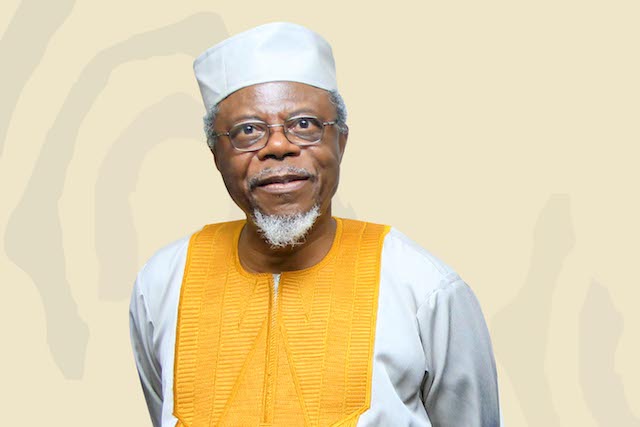
Chile Eboe‑Osuji, LLB, LLM, PhD, HLF, was President of the International Criminal Court from 2018 to 2021. He is now Distinguished International Jurist at Toronto Metropolitan University and the recipient of the Emeka Anyaoku Lifetime Achievement Award for Outstanding Contribution to the International Community.

Comments are closed for this story.