
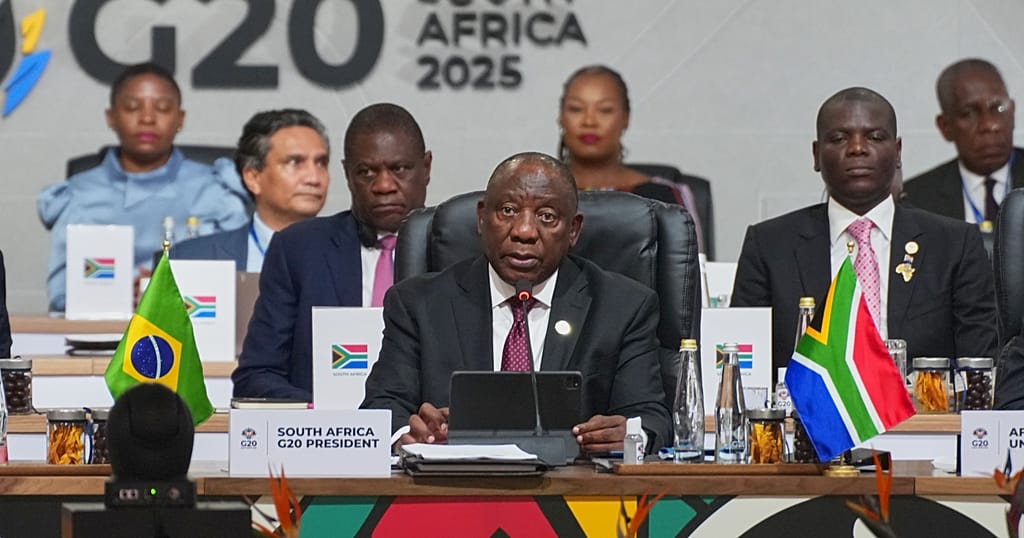
The G20 summit in South Africa concluded with the adoption of a leaders’ declaration, despite the United States’ absence. World leaders from the remaining G20 countries gathered in South Africa and agreed on a joint statement, marking a significant moment in international diplomacy.
The move comes amid a diplomatic rift between the US and South Africa that led the United States to boycott the two‑day talks. The Trump administration reportedly pressured South Africa not to adopt a declaration without an American delegation present. South African President Cyril Ramaphosa, however, said earlier this week that his country would not be “bullied” into changing its stance.
The adoption of the declaration is seen as a victory for South Africa, with Ramaphosa hailing it as a demonstration of the effectiveness of multilateralism. Although the contents of the declaration have not been disclosed, it is expected to address pressing global issues such as climate change and inequality. The summit, the first to be held in Africa, aimed to make progress on these long‑standing problems, and Ramaphosa emphasized the importance of leaving no person, community, or country behind, underscoring the G20’s commitment to cooperation and solidarity.
While the declaration was reportedly adopted unanimously, Argentina did not endorse it; President Javier Milei was absent from the summit in solidarity with the US, and the country was represented only by its Foreign Minister, Pablo Quirno. The break from tradition—adopting the declaration at the start of the summit rather than at the end—reflects South Africa’s determination to find consensus despite the US boycott.
The summit’s outcome is significant because it demonstrates the willingness of world leaders to work together to address global challenges. The adoption of the declaration sends a strong signal to the international community that multilateralism can deliver results. As the G20 countries move forward, they will be expected to build on this momentum, tackling pressing issues and promoting cooperation and understanding among nations. With an ambitious agenda and the commitment of its participants, there is hope for meaningful progress on climate change, global inequality, and other critical concerns.



Comments are closed for this story.