
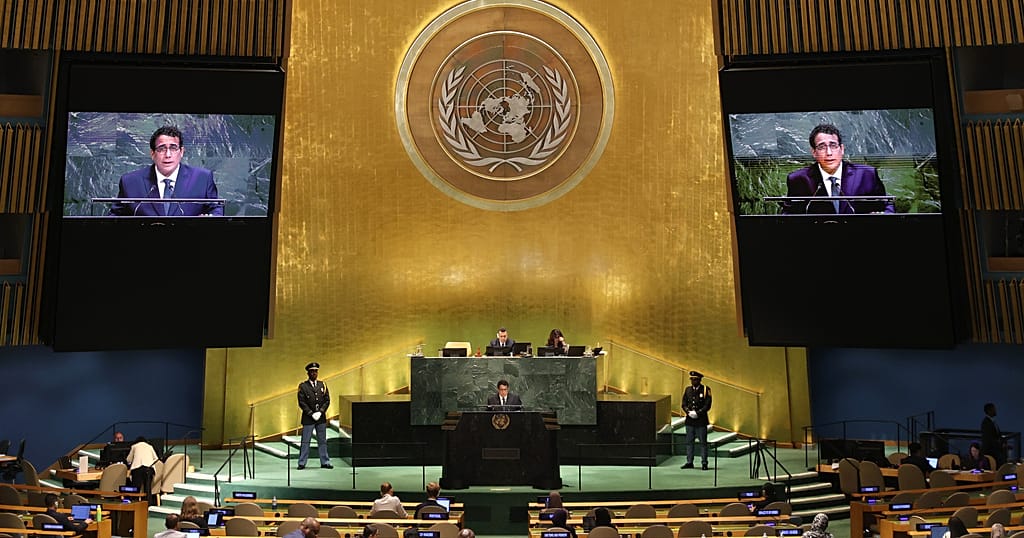
The United Nations Security Council voted on Tuesday to extend the authorization for member states to inspect ships suspected of violating the arms embargo on Libya. The resolution renews this permission for six months and applies to vessels on the high seas off Libya’s coast. It was adopted with 13 votes in favor, while Russia and China abstained.
Representatives of the United Kingdom emphasized that the international community remains committed to limiting the flow of weapons that fuel conflict and instability in Libya. The French representative described the arms embargo as “essential” for maintaining stability, particularly in the Tripoli region, and said the resolution sends a clear message about preventing sporadic clashes.
The new resolution was co‑written by France and Greece, both participants in the European Union’s Operation IRINI—the only Council‑mandated mission to inspect vessels suspected of breaching the embargo along Libya’s coast. Greece’s representative praised Operation IRINI as “an impartial and unique instrument” and the “primary tool for maritime enforcement” of the embargo.
However, several states, including Algeria and China, have criticized the operation for “insufficient transparency and effectiveness.” China’s representative urged the Council to consider the views of Libya and other relevant parties, to assess Operation IRINI’s mandate, and to make adjustments as necessary.
The Security Council first imposed the arms embargo on Libya in 2011, during the revolution that ousted former leader Muammar Gaddafi, and authorized vessel inspections in 2016. Extending this authorization underscores the ongoing international effort to address the conflict and instability in Libya. The renewal is a significant step toward enforcing the embargo and promoting regional stability, and the international community will be watching closely to see how the situation develops in the coming months.




Comments are closed for this story.