
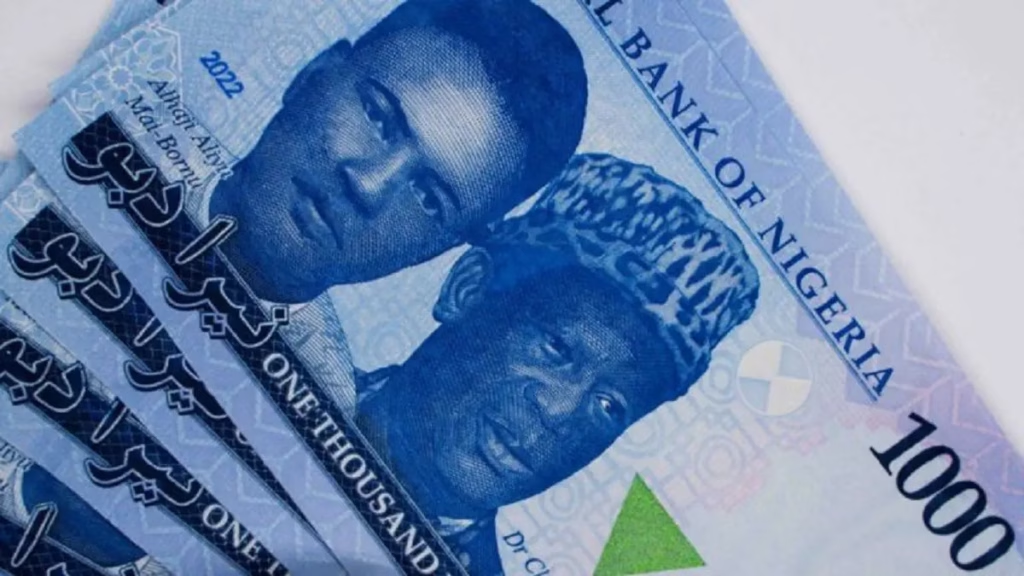
The Nigerian naira fell in value on Thursday, ending a recent streak of appreciation against the US dollar. Data from the Central Bank of Nigeria showed the official rate slipping to N1,443.90 per dollar, down from N1,442.92—a marginal weakening of N0.98. A similar decline was seen in the parallel market, where the naira dropped to N1,470 per dollar, five naira lower than the N1,465 level recorded on Monday. This move follows three consecutive trading sessions in which the naira had gained N10.92 against the dollar.
The central bank also reported that Nigeria’s foreign reserves rose to $44.56 billion as of November 26, 2025, up from $44.26 billion on November 21. The increase in reserves could help bolster the country’s ability to stabilize the currency.
These recent fluctuations highlight the complexities of foreign‑exchange markets and the many factors that influence currency values. The Central Bank of Nigeria continues to manage the naira and aim for economic stability, but the depreciation may affect businesses and individuals who depend on foreign‑exchange transactions.
In Nigeria’s broader economic context, the naira’s value is closely linked to foreign‑exchange reserves, the trade balance, and overall economic performance. As the nation navigates the challenges of a globalized economy, currency management will remain a critical component of its economic strategy.




Comments are closed for this story.