
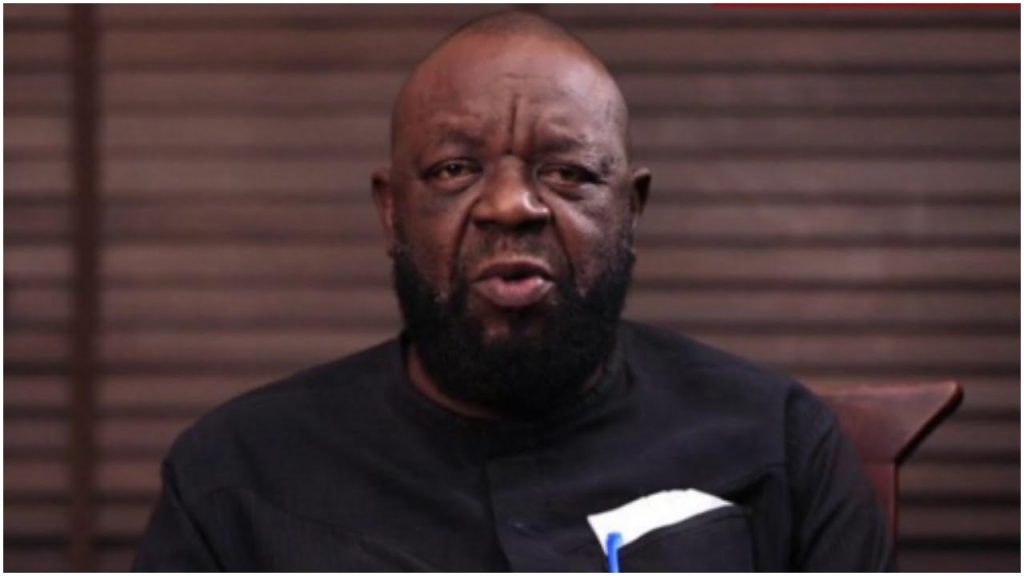
Aloy Ejimakor, a consultant to Nnamdi Kanu, the leader of the Indigenous People of Biafra (IPOB), explained why Kanu’s legal team blocked his trial. According to Ejimakor, the same reasons that led to the blockage also prompted Kanu to demand that Justice James Omotosho of the Abuja Federal High Court “show him the law” under which he was being tried. Ejimakor believes these arguments will likely cause the Court of Appeal to overturn Kanu’s conviction.
The charges against Kanu were originally brought under the Terrorism Prevention (Amendment) Act 2013 (TPAA 2013), which gave the Federal High Court extraterritorial jurisdiction without requiring a double‑criminality test. In 2022 the TPAA 2013 was repealed and replaced by the Terrorism Prevention and Prohibition Act 2022 (TPPA 2022), which introduced a double‑criminality requirement as a condition precedent for the Federal High Court to assert extraterritorial jurisdiction.
Ejimakor noted that Kanu was “extraordinarily renditioned” to Nigeria in June 2021. The Court of Appeal discharged him in October 2022 on the basis of this illegality, but the Supreme Court in December 2023 upheld the validity of the trial on the charges despite the rendition and remitted the case for trial.
Kanu’s legal team objected to the court’s jurisdiction, citing the double‑criminality test under Section 76 of the TPPA 2022 and the failure to specify the foreign country from which the broadcasts were made. Under the TPPA 2022, an act committed abroad is an offense only if it has an impact in Nigeria and is also a crime in the foreign country where it occurred. Ejimakor argued that the omission of the foreign country is a fatal jurisdictional defect that deprives the Federal High Court of authority.
He believes the Court of Appeal will likely overturn the conviction because the prosecution failed to plead and prove that Kanu’s alleged acts constituted a criminal offense both in Nigeria and in the United Kingdom or Kenya, where the broadcasts were made. The identity of the foreign country is not merely a detail but a jurisdictional fact; its absence renders the charge incompetent and prevents the court from establishing a key jurisdictional element.
In summary, Ejimakor’s explanation highlights significant legal barriers to Kanu’s prosecution, including the double‑criminality requirement and defective charges. The case is expected to proceed to the Court of Appeal, where these issues will be reconsidered, and the outcome will have important implications for Kanu’s case and for the application of the Terrorism Prevention and Prohibition Act 2022 in Nigeria.




Comments are closed for this story.