
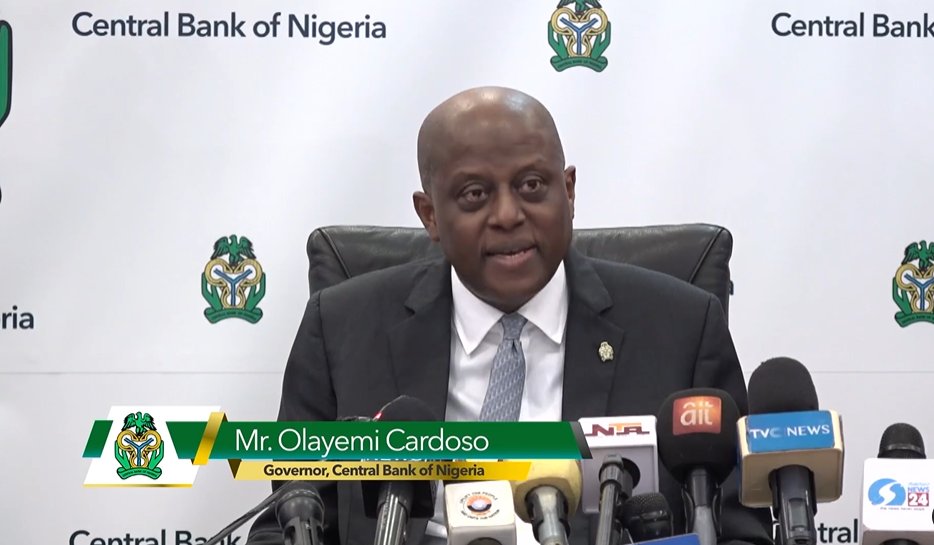
The Central Bank of Nigeria (CBN) has announced that the country has entered a new phase of macro‑economic stability after two years of difficult reforms. Governor Olayemi Cardoso made the statement while delivering the keynote address at the Chartered Institute of Bankers of Nigeria’s 60th Annual Bankers’ Dinner in Lagos. He said the reforms have restored investor confidence, strengthened the naira and put the economy on a firmer path to sustainable growth. Cardoso attributed Nigeria’s turnaround to “disciplined choices and a commitment to transparency, data‑driven policies, and institutional rebuilding.”
Nigeria’s economy, which was on the brink of collapse in late 2024, has shown significant progress in inflation control, exchange‑rate stability, capital inflows and banking resilience. Inflation has fallen for seven consecutive months, reflecting a sustained and credible policy direction. It declined from 34.6 % in November 2024 to 16.05 % in October 2025, the lowest level in years. Food inflation also dropped sharply to 13.12 % in October, down from 21.87 % in August, restoring real purchasing power for households and businesses. The return to orthodox monetary policy and the end of deficit financing have strengthened credibility and anchored inflation expectations, with further disinflation expected in 2026 as production rises and foreign‑exchange (FX) liquidity improves.
The 2024 reforms enabled the CBN to clear over $7 billion in FX backlogs that had previously weakened market confidence. The implementation of the Foreign Exchange Code and the Electronic Foreign Exchange Trading System (EFEMS) platform removed opacity, improved transparency and restored discipline to FX trading. The naira now trades within a narrow, stable range, with the gap to the parallel market falling to less than 2 %. Interventions are rebuilding reserves organically, supported by rising non‑oil exports and stronger capital inflows.
Governor Cardoso emphasized that Nigeria’s economic foundations are now stronger following FX unification, EFEMS deployment and modernised supervision. The progress achieved reflects partnership, discipline and “the courage to pursue necessary reforms.” The Central Bank will remain disciplined, forward‑looking and committed to ensuring stability and inclusive, sustainable growth.
Looking ahead to 2026, the governor outlined priorities that include stronger banking stability, full inflation‑targeting and a modernised payments ecosystem. Other goals are boosting responsible fintech innovation, strengthening institutional capacity and deepening global regulatory partnerships. With Nigeria’s removal from the Financial Action Task Force (FATF) grey list in 2025, the country is expected to experience eased banking frictions and increased integration.



Comments are closed for this story.