
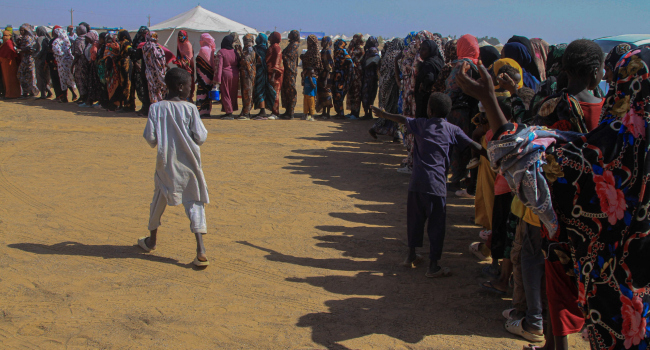
Sudan’s economic crisis has deepened as bartering becomes the norm. The banking system has collapsed, forcing people to exchange goods for essential items. The conflict, which began in April 2023, has left tens of thousands dead, 12 million displaced, and the economy in ruins. In many areas, clothing and household appliances serve as currency for food, fuel and other necessities.
In the town of Dilling, South Kordofan, which is under siege by the paramilitary Rapid Support Forces (RSF), residents have turned to barter for survival. “I haven’t held a banknote in more than nine months,” said civil servant Ali, recalling how he traded a hoe and a chair for three bags of sorghum, a staple cereal in much of Africa.
The war has devastated Sudan’s financial infrastructure: banks are closed or looted, safes emptied, and the Sudanese pound has plummeted. On the black market, one euro now fetches 3,500 pounds, up from 450 pounds before the war. With cash scarce, many rely on digital transactions through the Bankak app, which enables users to receive salaries, aid and funds from relatives abroad. However, this solution is not universal; rural populations often lack bank accounts, passports or phones.
In RSF‑controlled areas, law and order have collapsed, leading to widespread looting and extortion. Satellite internet systems such as Elon Musk’s Starlink are widely used, yet the military has banned their sale and use in some zones. The economic turmoil has also spurred fraud and exploitation: merchants extend credit and record debts in notebooks, while others charge exorbitant commissions for cash transfers. New banknotes introduced by pro‑army authorities have further fragmented the monetary system, effectively dividing the country into separate economic zones.
As the conflict drags on, the humanitarian situation remains dire. The United Nations warns of the world’s largest hunger and displacement crises, with millions in need of aid. The economic collapse has forced many Sudanese to depend on bartering and informal exchanges to survive. The international community must act to address the crisis and support the people of Sudan in their time of need.



Comments are closed for this story.