
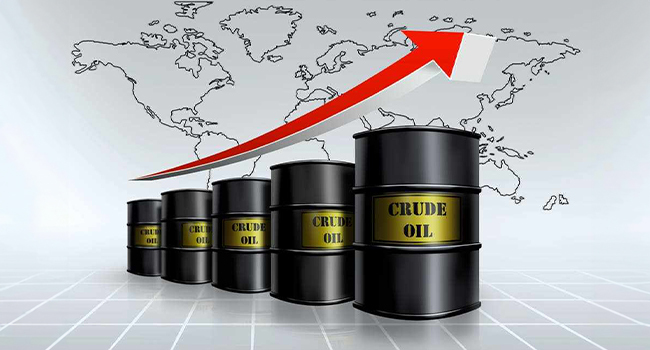
Oil prices have risen after OPEC+ members reaffirmed their commitment to maintain current output levels. As of 05:01 WAT on Monday, Brent crude futures were up $1.01, or 1.62%, at $63.39 a barrel, while U.S. West Texas Intermediate gained $1.00, or 1.71%, to $59.55. This surge follows a fourth consecutive monthly decline for both contracts—the longest losing streak since 2023—driven by expectations of higher global supply.
The Organization of the Petroleum Exporting Countries and its allies initially agreed to pause production increases in early November amid concerns of a potential supply glut. On Sunday, OPEC+ reiterated the need for a cautious approach, allowing flexibility to continue or reverse voluntary production adjustments, a move that market participants had widely anticipated.
Recent geopolitical developments have added further uncertainty to the oil market. U.S. President Donald Trump sparked concerns by stating that the airspace above and surrounding Venezuela should be considered closed, given the country’s significant oil production. Although Trump later spoke with Venezuelan President Nicolás Maduro, he offered no additional details or clarification. In addition, the Caspian Pipeline Consortium, which handles over 1 % of global oil, halted exports after a Ukrainian drone attack damaged a mooring at its Russian terminal on the Black Sea. ING analysts said this incident, combined with escalating U.S.–Venezuela tensions, has heightened supply risks, noting that further Ukrainian attacks on Russian energy infrastructure have increased those risks.
In Europe, the prospect of a Russia‑Ukraine peace deal has become increasingly uncertain, reversing the bearish sentiment of the past two weeks. Ukraine’s military recently claimed to have struck a Russian oil refinery and a military aviation plant in the Rostov region. As the situation continues to unfold, oil prices are likely to remain volatile, with market participants closely monitoring geopolitical developments and their potential impact on global supply. The recent price increase underscores the market’s sensitivity to supply‑demand fluctuations and geopolitical tensions.



Comments are closed for this story.