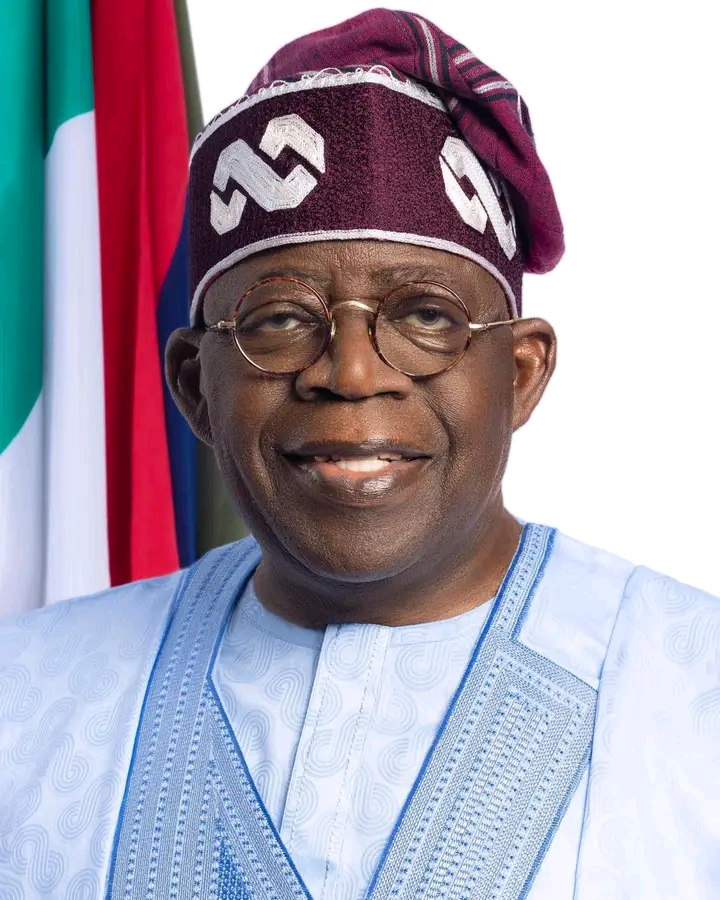
President Bola Tinubu said Thursday that his support for the Dangote Refinery was driven by a broader strategy to catalyze private-sector investment across the Nigerian Economy. Speaking at a meeting with the board and management of the Nigerian Exchange Group at the Presidential Villa in Abuja, Tinubu framed the $20 billion petrochemical complex as a proof of concept for indigenous industrial capacity.
The president traced the origins of the project to discussions with former President Muhammadu Buhari before his own inauguration. “We were talking about the refinery then, and we found a way to push it to the private sector,” Tinubu said. “God bless the soul of former President Muhammadu Buhari.” Since assuming office on May 29, 2023, his administration has introduced a naira-for-crude swap arrangement designed to ease dollar demand and stabilize the currency. The mechanism allows domestic refineries to purchase crude in local currency, removing the need for letters of credit and protracted paperwork.
Tinubu argued that Nigeria possesses the demographic scale, technical talent, and entrepreneurial drive to build a trillion-dollar economy. “We need to encourage the private sector to invest more in the economy,” he said. “It’s one of the reasons I backed Dangote, even before I became president.”
The remarks come as the Dangote Refinery, Africa’s largest single-train facility, ramps up production of petrol, diesel, and aviation fuel. Its 650,000-barrel-per-day capacity aims to end Nigeria’s decades-long reliance on imported petroleum products, a drain that has historically consumed up to 30% of foreign exchange earnings. The naira-for-crude framework, negotiated between the Nigerian National Petroleum Company Limited and the refinery, is expected to reduce dollar outflows by an estimated $7.5 billion annually once fully operational.
Market operators at the Nigerian Exchange Group session welcomed the policy continuity signaled by Tinubu’s remarks. The exchange’s chief executive, Temi Popoola, noted that capital formation depends on predictable regulation and infrastructure that lowers the cost of doing business. Analysts say the refinery’s success could unlock downstream investment in petrochemicals, fertilizers, and logistics, creating a multiplier effect across the real sector.
The president’s emphasis on private-sector leadership marks a departure from the state-led industrialization models of previous decades. With the refinery now supplying the domestic market and exporting surplus, the administration faces pressure to replicate the public-private partnership model in power, transportation, and agriculture — sectors where infrastructure deficits continue to constrain productivity.