
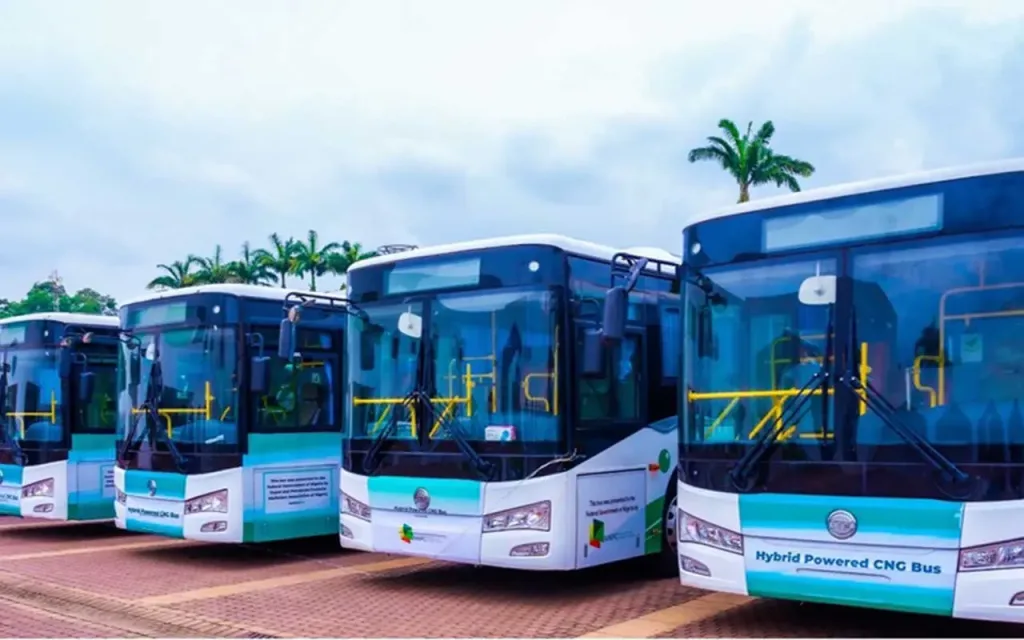
The Federal Government of Nigeria has taken a significant step toward enhancing its transportation sector with the arrival of 50 additional compressed natural gas (CNG) buses. This development is part of the government’s effort to provide more affordable and safer transportation options for its citizens.
According to Ajayi Oluwatobi, chairman of Nordmotion—an indigenous automobile firm—the company has successfully delivered the 50 CNG‑powered buses to the federal government. This latest delivery follows a previous shipment of 50 CNG buses, underscoring the government’s commitment to its Presidential Compressed Natural Gas Initiative (PCNGI).
The PCNGI was established in 2023 by President Bola Ahmed Tinubu as a measure to mitigate the effects of fuel‑subsidy removal on Nigerians. By promoting the use of compressed natural gas as an alternative fuel, the government aims to reduce the financial burden on citizens while decreasing the nation’s reliance on fossil fuels.
The introduction of these CNG‑powered buses is expected to have a positive environmental impact, as they emit significantly fewer pollutants than traditional diesel vehicles. This initiative aligns with global efforts to transition toward cleaner energy sources and reduce carbon footprints.
With the arrival of the additional buses, the federal government moves closer to achieving its goal of providing cheaper and more environmentally friendly transportation services to Nigerians. As the country continues to navigate the challenges associated with fuel‑subsidy removal, initiatives like the PCNGI are crucial for minimizing the impact on citizens.
The successful delivery of these CNG buses testifies to the federal government’s commitment to improving the lives of its people. As the transportation sector evolves, further investments in alternative fuels and more efficient vehicles are likely, ultimately leading to a more sustainable and affordable transportation system for Nigerians.



Comments are closed for this story.