
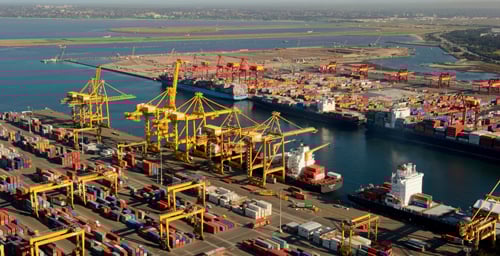
Nigeria’s housing market is confronting significant challenges because it depends heavily on imported building materials. The State of Lagos Housing Market Report (Volume 3) shows that 70 % of the materials used nationwide are imported, leaving the sector vulnerable to global supply‑chain disruptions and currency fluctuations.
The construction industry, especially in Lagos, is growing rapidly, with an expected annual increase of 8 % and a projected value of NGN 25.72 trillion by 2025. However, this expansion is being hampered by rising material costs, inflation, and bureaucratic obstacles. The report notes that growth is driven more by price increases than by volume, indicating that efficiency and affordability are being compromised by structural issues.
High demand for housing in Lagos—fuelled by rapid urbanisation and population growth—exacerbates the problem. Government infrastructure projects such as the Lagos Rail Mass Transit are expected to boost property values and construction demand, but the market’s reliance on imported materials remains a significant risk, exposing the sector to external shocks and currency volatility.
Prices of essential building materials in Lagos have risen sharply between 2015 and 2025, with acceleration from 2023 onward. For example, the cost of iron rods jumped from N87,000 per 133 units in 2015 to over N1,600,000 per tonne in 2024, a 100 % increase from 2023.
To address these challenges, the report recommends a multi‑pronged approach: enhancing local production, optimising supply chains, and promoting sustainable, innovative building practices. It also stresses the need for consistent policy reforms and the attraction of domestic and foreign investment to stabilise prices and tackle the severe housing deficit.
The State of Lagos Housing Market Report provides a critical analysis of Lagos’s housing sector, which serves as a bellwether for Nigeria’s broader construction industry. Its findings and recommendations are essential for policymakers, industry stakeholders, and investors seeking to navigate the complexities of the Nigerian housing market and unlock its potential for sustainable growth and development.



Comments are closed for this story.