
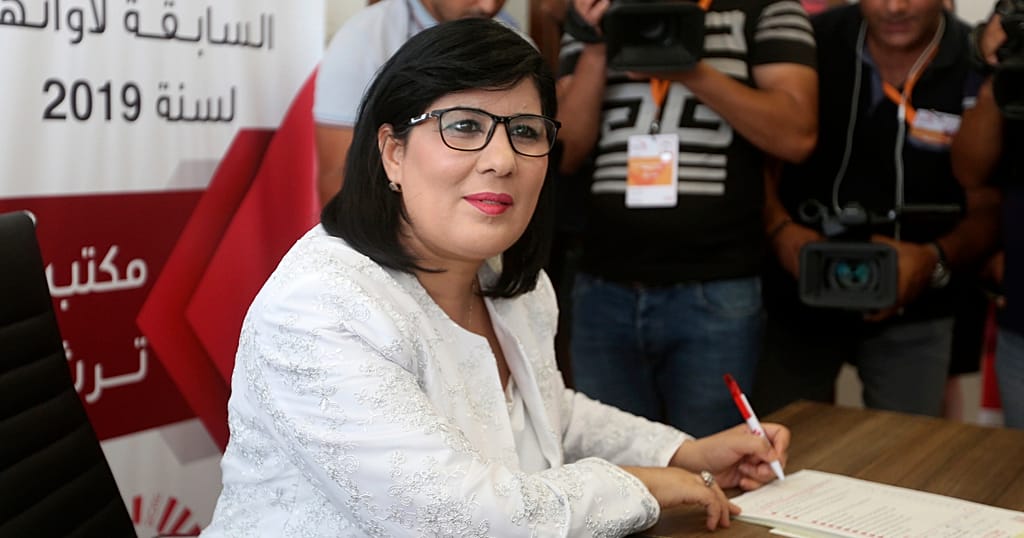
A Tunisian court has sentenced prominent opposition leader Abir Moussi to 12 years in prison, part of an expanding crackdown on critics of President Kais Saied. Moussi, who leads the Free Constitutional Party, has been in custody since her 2023 arrest outside the presidential palace on suspicion of assault intended to cause chaos. She maintains that she was merely exercising her right to criticize the government and vows to keep resisting what she calls “abuse, torture, and political and moral violence.”
This is Moussi’s third trial. In August of last year she received a two‑year sentence under Decree 54, a law Saied enacted in 2022 to combat “false news.” That sentence was later reduced on appeal, and a second jail term under the same law is currently being appealed. Moussi’s lawyer described the latest ruling as “unjust” and “politically motivated.”
Moussi is among dozens of prominent politicians now behind bars as Saied’s crackdown intensifies against journalists, activists, civil‑society groups, and opposition leaders. Last month an appeals court handed down jail terms of up to 45 years to numerous opposition figures, businesspeople, and lawyers on charges of conspiring to overthrow the president. Rights groups and opponents argue that the judiciary is being used to silence dissent, while Saied denies any dictatorial intent, claiming he is working to “cleanse” Tunisia of “traitors.”
The crackdown traces back to 2021, when Saied dissolved the elected parliament and began ruling by decree—a move widely condemned by rights organizations. The latest developments have serious implications for democracy and human rights in Tunisia. As Moussi’s appeal proceeds, international attention will likely remain focused on how the country treats opposition figures and upholds the rule of law, with many calling for stronger protection of democratic freedoms and an end to the use of the courts for political repression.



Comments are closed for this story.