
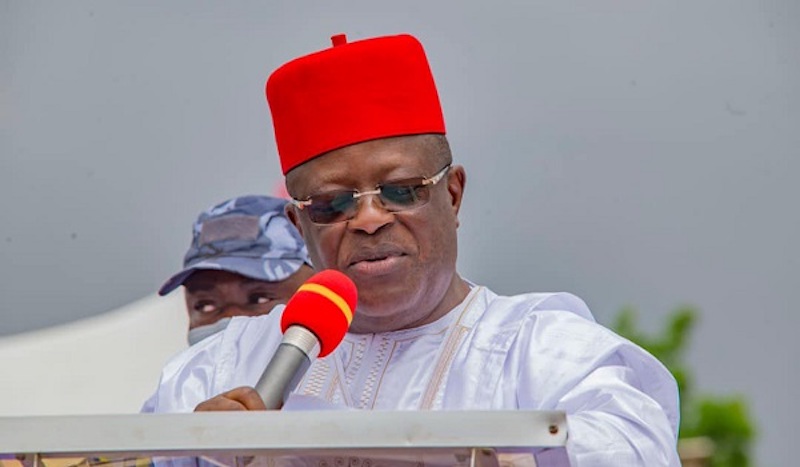
Nigerian Minister of Works David Umahi declared that the agitation for Biafra is no longer necessary because the South‑East has become more integrated into the country’s mainstream under President Bola Tinubu’s administration. He made the remark while inspecting ongoing federal infrastructure projects in the region, noting that long‑standing feelings of exclusion have faded as the federal government has turned its attention to key projects.
According to Umahi, the previous administration’s marginalisation of the South‑East helped fuel separatist sentiments, but the current government’s efforts have alleviated those concerns. “There will be no need for Biafra again,” he said, emphasizing that the region is now well‑integrated into the nation. He praised President Tinubu’s administration, stating that the South‑East is satisfied with its level of inclusion and engagement.
The minister highlighted several ongoing and completed federal projects, including road construction that had been abandoned for over a decade before being revived by the current government. A notable example is a section being built by MTN under the RCC, expected to be finished by February at a cost of 202 billion naira. Umahi noted that previous governments had initiated projects but failed to complete them, leaving the region with unfulfilled promises.
The increased focus on infrastructure development in the South‑East marks a significant shift from the past, when the region felt neglected and marginalised. Government efforts to address these concerns have fostered a sense of integration and inclusion among the population. As investment in the region’s infrastructure continues, the sentiment of exclusion that once fueled separatist movements is likely to keep fading.
Developing infrastructure in the South‑East is crucial for Nigeria’s economic growth and stability. The completion of these projects is expected to improve connectivity, boost economic activity, and enhance the overall quality of life for residents. As Nigeria works toward a more integrated and developed nation, the progress made in the South‑East serves as a positive example of the government’s commitment to meeting the needs of all its citizens.



Comments are closed for this story.