
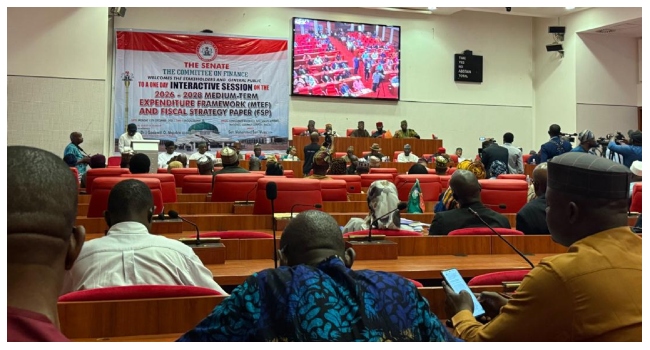
The Federal Government of Nigeria announced that roughly 70 % of the 2025 budget will be rolled over into 2026. Finance Minister and Coordinating Minister of the Economy, Wale Edun, disclosed this during a meeting with the Senate Committee on Finance on 15 December 2025. The session focused on the 2026‑2028 Medium‑Term Expenditure Framework and Fiscal Strategy Paper (MTEF/FSP).
Edun explained that the 2024 budget had been extended and largely implemented, with an emphasis on capital expenditure. However, only 30 % of the 2025 budget has been fully funded, necessitating the rollover of the remaining 70 % into the next fiscal year. He attributed the shortfall to revenue estimates rising from 20 trillion naira in 2024 to 40 trillion naira in 2025, even though actual collections fell short of government projections. Edun stressed the need to shift from borrowing to revenue generation, noting that “there has been a yeoman’s job in revenue mobilisation, but we need a more robust revenue optimisation programme for 2026.” He added that the economy requires mass savings and productive investment to grow.
Accountant‑General of the Federation Babatunde Ogunjimi confirmed that arrangements have been made to clear outstanding 2024 obligations, with indigenous contractors receiving up to 80 % of what is owed. Nevertheless, lawmakers expressed concerns about budget implementation. Senator Danjuma Goje questioned why constituency projects remained unimplemented despite claims that 2025 revenue targets had been met.
In response, Edun said the rollover is intended to avoid repeated budget extensions and to ensure that 2026 functions as a single, coherent budget year. He noted that while non‑oil revenue has performed relatively well, oil revenue continues to pose challenges, requiring flexibility in spending commitments.
The Senate Committee on Finance announced the formation of a three‑member committee to collaborate with the President’s economic team in fast‑tracking payments to indigenous contractors. The committee will also rigorously examine the assumptions underlying the MTEF to ensure fiscal discipline and realistic projections. This development underscores the government’s efforts to manage finances responsibly and prioritize outstanding obligations.



Comments are closed for this story.