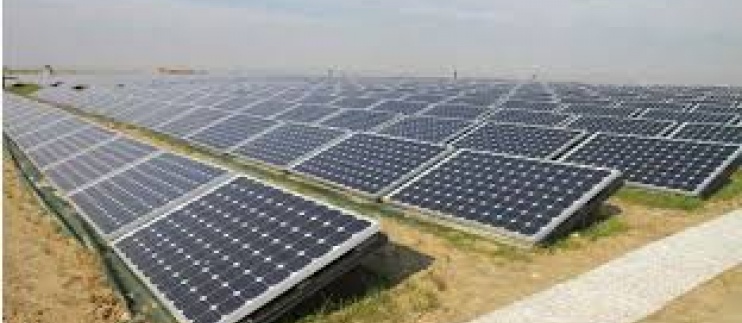
The governments of Kaduna and Adamawa states have issued Certificates of Occupancy for mini‑grid sites that the Rural Electrification Agency (REA) is developing under its Minimum Subsidy Tender (MST) programme. The rapid approvals, granted hours after discussions with REA officials, demonstrate the states’ willingness to streamline land‑access procedures and accelerate renewable‑energy deployment in underserved communities.
REA Managing Director Abba Aliyu praised the governors for their prompt action, saying it sends a clear signal to investors, developers and financiers that the states are ready to support large‑scale electrification projects. The MST initiative is a core element of the Nigeria Electrification Project, which uses a competitive, private‑sector‑led tender process to fund mini‑grid installations in pre‑selected communities with strong economic potential.
Under the programme, REA identifies, verifies and sensitises target villages while developers compete for capital grants to build solar‑powered mini‑grids. The first phase focuses on more than 163 sites across fifteen states, including Abia, Anambra, Bauchi, Cross River, Kano, Niger, Ondo, Ogun, Plateau and Kebbi. Sites are grouped into state‑based lots to achieve economies of scale and improve long‑term sustainability. The programme aims to install roughly 213 MW of solar photovoltaic capacity in the participating communities.
In Kaduna State, land titles were secured for two sites: Trapco in Chikun Local Government Area, slated for 3,100 connections and a 2 MW capacity, and Makarfi 1 in Makarfi LGA, planned for 4,000 connections with a 4 MW capacity.
Adamawa State received Certificates of Occupancy for three interconnected projects. The Kofare site in Yola South LGA is designed for 19,220 connections and an 8 MW solar capacity; Mbamba, also in Yola South, will serve 2,282 connections with 0.8 MW; and Saminaka in Fufore LGA is projected to connect 4,660 households with a 2.5 MW system.
Together, the two states’ projects will bring electricity to an estimated 33,262 homes, contributing to Nigeria’s broader goal of universal access to reliable, clean energy. The swift issuance of land titles reduces a common bottleneck in infrastructure rollout and is likely to encourage further private‑sector participation in the mini‑grid sector.
As the MST programme progresses, monitoring of construction milestones and connection targets will be essential to assess its impact on rural livelihoods and regional economic development. Continued cooperation between state authorities, REA and private developers will be critical to maintaining momentum and delivering on the promise of sustainable electrification across Nigeria’s underserved areas.