
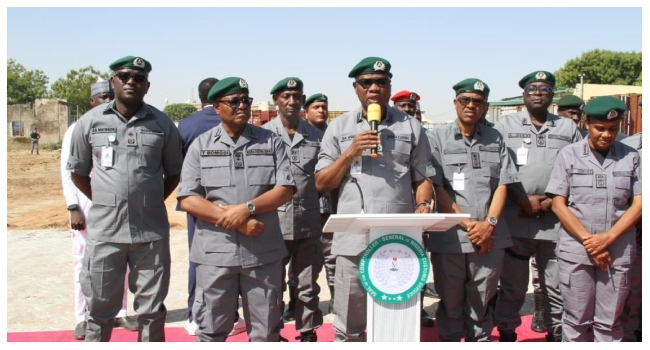
The Nigeria Customs Service (NCS) has intercepted 20 diverted transit containers with a combined Duty Paid Value (DPV) of ₦769.5 million across the Kano/Jigawa axis. The seizure was announced by Comptroller‑General of Customs (CGC) Bashir Adeniyi at a press conference in Kano. The operation, conducted in the second and fourth quarters of the year, resulted from intelligence‑based enforcement aimed at dismantling organized cargo‑diversion networks.
Adeniyi warned that cargo diversion has serious economic and security implications for Nigeria, eroding government revenue and damaging the country’s credibility in international trade. The seized containers contained vitrified tiles diverted from the Kano Free Trade Zone, diesel engine oil, polyester materials, used clothing and medical consumables, some of which are prohibited under the Common External Tariff (CET) regulations.
One container remains under detention pending legal proceedings, while two containers loaded with medical consumables were forfeited to the Federal Government following a court judgment on 10 December 2025. Additionally, Abdulrahman Sani Adam was arrested, prosecuted and convicted for container diversion, receiving a three‑year prison sentence or a ₦3 million fine.
To improve transit cargo control, the NCS is close to completing a nationwide deployment of electronic container‑tracking devices. This technology provides real‑time monitoring, ensures route compliance and triggers alerts in cases of tampering. The CGC reaffirmed the Service’s commitment to revenue protection, trade facilitation and border security, warning smugglers and their collaborators of prosecution, forfeiture of goods and loss of trading privileges.
Importers, clearing agents and logistics operators are urged to strictly follow approved transit procedures and report any suspicious activities to the nearest Customs formation. The NCS’s efforts to combat cargo diversion and strengthen transit cargo control underscore the importance of protecting national revenue and security. As the Service continues to deploy innovative technologies and enforcement strategies, the incidence of cargo diversion is expected to decline, fostering a more secure and efficient trade environment in Nigeria.



Comments are closed for this story.