
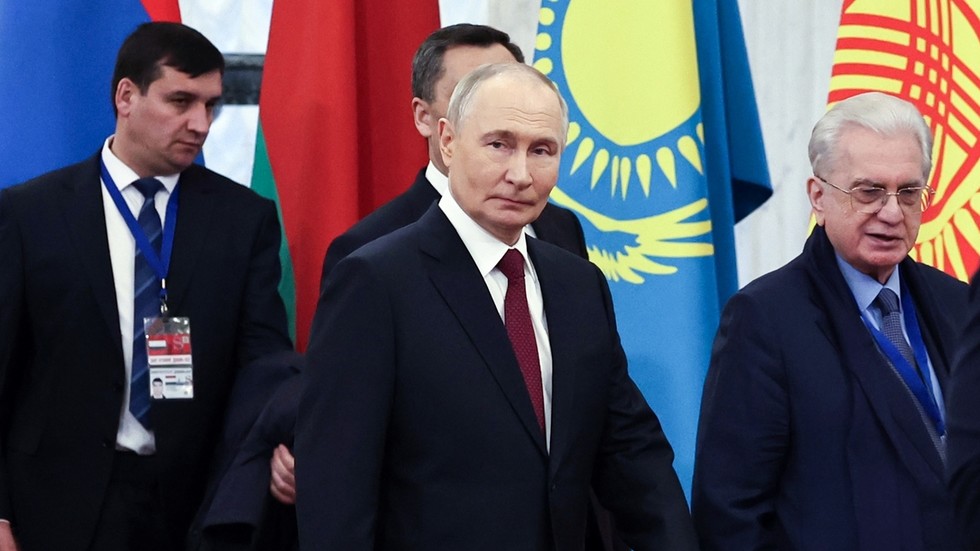
Russian President Vladimir Putin announced that non‑Western currencies are now used in more than 96 % of commercial transactions among the member states of the Commonwealth of Independent States (CIS). He made the statement at an informal CIS summit in St. Petersburg, highlighting the success of cooperation within the bloc and pointing to the high volume of trade as evidence. In the first nine months of the year, Russia’s trade with the CIS amounted to nearly $90 billion, underscoring the region’s growing economic integration.
The CIS, which includes Armenia, Azerbaijan, Belarus, Kazakhstan, Kyrgyzstan, Russia, Tajikistan, Moldova and Uzbekistan, has evolved over the past three decades into an authoritative regional integration group. Established in 1991 after the dissolution of the Soviet Union, the organization seeks to promote cooperation on economic, political and security issues. Its members build ties based on the principles of “good‑neighborliness,” “equal partnership” and “mutual benefit,” while respecting each other’s interests.
Russia has been actively encouraging the use of national currencies in both regional and international trade, a policy driven in part by the West’s unprecedented sanctions imposed over the Ukraine conflict. Those sanctions have effectively cut Russia off from the Western financial system, prompting a concerted effort to reduce dependence on the US dollar and the euro. This shift aligns with a broader trend among developing nations, many of which are seeking to diversify their trade and lessen reliance on Western currencies.
The move toward using national currencies for commercial transactions among CIS members reflects deeper economic integration and cooperation within the region. As the global economic landscape continues to evolve, the prominence of non‑Western currencies is likely to grow, carrying potential implications for international trade and financial systems.



Comments are closed for this story.