
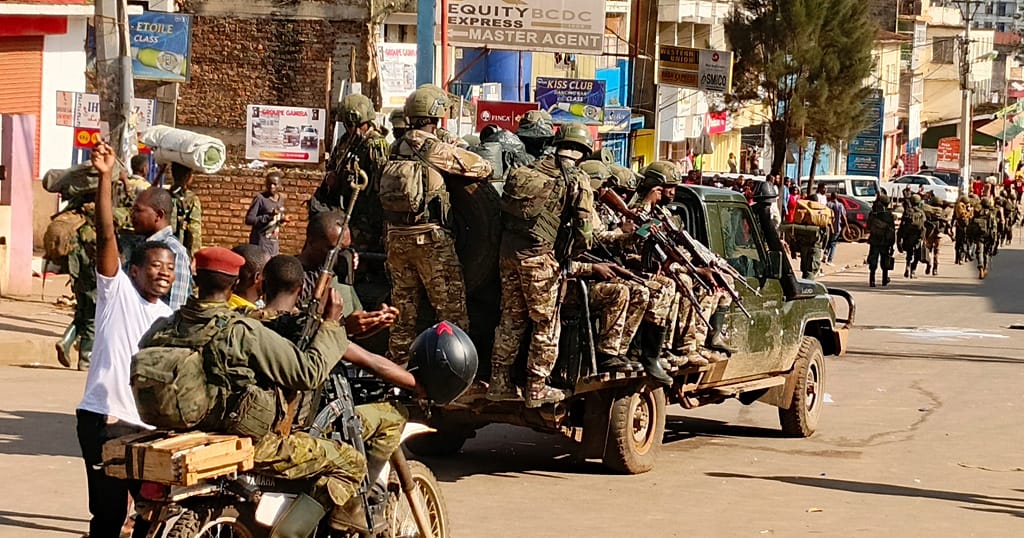
The Trump administration has expressed dissatisfaction with the withdrawal of the Rwanda-backed M23 rebel group from the strategic town of Uvira in eastern Congo. According to a senior US official, the group’s pullout is incomplete, with some fighters still present in the area. This development comes after M23 seized the town on December 10, sparking fears of regional instability and violating a US-brokered peace deal.
The capture of Uvira marked the rebels’ biggest advance in months, resulting in the displacement of hundreds of thousands of people and killing thousands. The US had brokered a peace deal between Congolese President Felix Tshisekedi and Rwandan leader Paul Kagame, which was reaffirmed during their meeting with President Donald Trump in Washington.
Following US Secretary of State Marco Rubio’s criticism of Rwanda’s actions in eastern Congo, M23 pledged to withdraw from Uvira to allow peace talks to proceed. However, Washington remains unsatisfied with the group’s withdrawal, citing continued M23 presence around the city. Some fighters have been spotted wearing police uniforms instead of military attire, according to residents.
Sporadic gunfire was reported in the Kalundu neighborhood of Uvira on Tuesday, with both M23 and the Congolese army blaming each other for the violence. Rwanda has denied backing M23, instead accusing Congolese and Burundian forces of perpetuating the conflict. A UN report in July found that Rwanda exercises command and control over the rebel group.
The recent fighting has led to a significant humanitarian crisis, with over 84,000 refugees fleeing to Burundi this month. The UN refugee agency has expressed concern over the country’s capacity to accommodate the influx of refugees. Additionally, around 500,000 people have been displaced in South Kivu province since early December, prompting the World Food Programme to scale up aid for vulnerable populations.
The conflict has also had significant economic implications for Congo, with M23’s advance costing the country 0.4 percent of its GDP. The International Monetary Fund has warned that continued insecurity could impact the country’s growth and future development, particularly if investment and social programs are cut. As the situation remains volatile, the international community continues to monitor the developments, emphasizing the need for a lasting resolution to the conflict.