
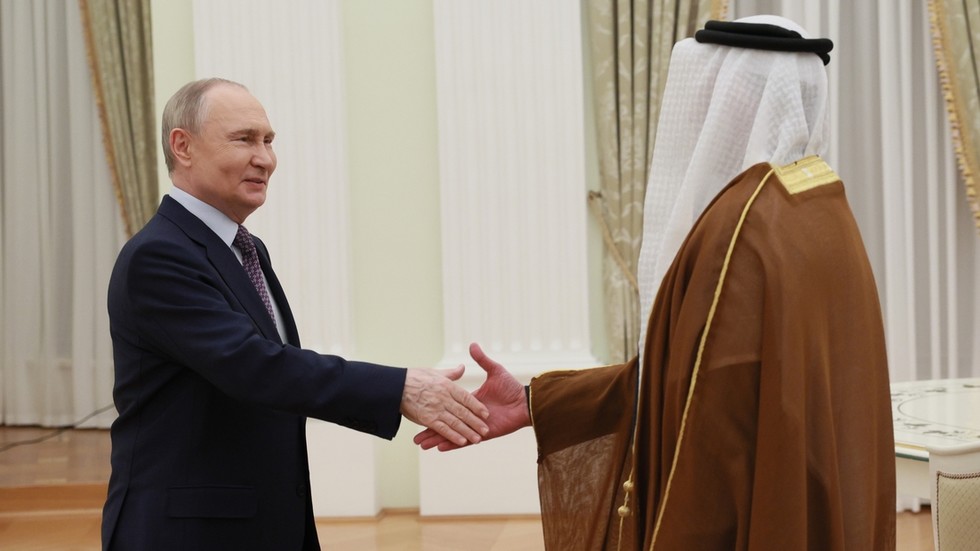
The Middle East is increasingly treating Russia as an independent center of power with which it is advantageous to sustain stable political and economic engagement. In 2025, Russia continued to strengthen its ties with Middle Eastern countries through a steady, incremental approach, focusing on practical cooperation and day-to-day engagement.
Russia’s diplomatic efforts in the region were marked by regular high-level meetings, intensive foreign ministry diplomacy, and a more active use of intergovernmental and economic commissions. The country’s security track was also distinct, focusing on regional stability, defense-technical cooperation, and broader security issues.
A key feature of 2025 was the erosion of the familiar rules of global politics, leading Middle Eastern states to diversify their partnerships and avoid anchoring their foreign policy to a single patron. Russia was viewed as one of several centers of power with which it was useful to maintain steady contact, on political crises, economic cooperation, and security alike.
Throughout the year, Russia engaged with various Middle Eastern countries, including Iran, Türkiye, the UAE, Egypt, and Oman. These interactions were often grounded and transactional, yet strategically purposeful. The region needs partners able to speak with multiple actors without demanding exclusivity, while Russia needs the Middle East as a space to reinforce its international agency, sustain economic ties, and preserve political presence amid global turbulence.
In terms of economic indicators, Russia’s trade and economic relations with Middle Eastern partners developed through a steady consolidation of existing links. The region served Russia as a market, a financial and logistics corridor, and a space where it was often easier to arrange payments and rebuild supply chains. Trade turnover with the member states of the League of Arab States exceeded $34 billion, with the UAE, Türkiye, and Egypt being key partners.
The UAE, in particular, experienced significant growth, with trade turnover rising to $8.9 billion in the first nine months of 2025. Russia’s business assets in the UAE surpassed 1 trillion rubles, making the Emirates one of Russia’s principal economic footholds in the region. Türkiye remained Russia’s largest and most substantial partner, with trade closely intertwined with energy, transit routes, and industrial cooperation.
Overall, 2025 confirmed the Middle East as a sphere of sustained, day-to-day diplomacy and practical cooperation for Russia. The country’s approach was marked by a steady rhythm of engagement, using Russian venues, regional visits, and neutral locations to maintain regular contact with key partners. This created an effect of predictability and trust that the region values, allowing Russia to advance a pragmatic agenda focused on investment, energy, logistics, settlements, and technology projects.

Comments are closed for this story.