
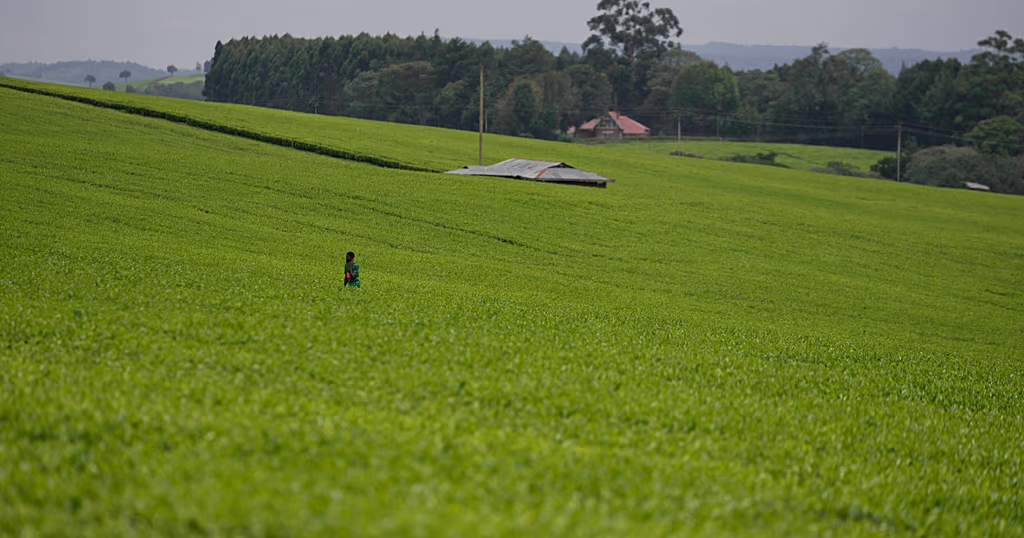
In western Kenya, thousands of women face losing their land and homes due to cultural practices and a lack of awareness about their constitutional rights. Rebecca Anyango, a 70-year-old widow, has lived in her house for 26 years but is now threatened with eviction by her late husband’s family, who claim she has no inheritance rights. Anyango’s situation is not unique, as many women in the region are unaware that the country’s Constitution guarantees their right to land ownership.
The issue is further complicated by cultural expectations and practices that can be considered illegal. After the death of her husband, Anne Bonareri was expected to be taken in as a wife by her brother-in-law, a practice known as “widow inheritance.” When she refused, she was attacked by armed men and left with nothing. Bonareri’s story is a stark example of the challenges faced by women in rural areas, where widowhood can come with significant cultural and social pressures.
Women’s advocates argue that a key challenge is the lack of legal assistance for women like Anyango and Bonareri. However, there is hope for change. In November, the local assembly in Siaya County passed a Widows Protection Bill, which aims to criminalize the disinheritance of women and their forced remarriage. The bill, championed by county legislator Scholastica Madowo, also establishes welfare committees to help widows access legal aid.
If signed into law, the bill could provide a significant step forward for women’s rights in the region. Activist Emma Mong’ute, whose mother was also disinherited, has founded an organization to provide legal advice and connect women with pro bono lawyers. Mong’ute argues that the disinheritance of widows creates a cycle of poverty for hundreds of thousands of children, who are left without access to education, healthcare, and other basic necessities.
The issue of widow inheritance and land rights is complex and deeply ingrained in cultural practices. However, with efforts like the Widows Protection Bill and organizations like Mong’ute’s, there is a growing movement to protect the rights of women and children in western Kenya. As the bill awaits signature, women’s advocates are hopeful that it will mark a significant step towards a more just and equitable society.



Comments are closed for this story.