
eria’s Gas Resources Key to Future Prosperity, Says NNPC Boss**
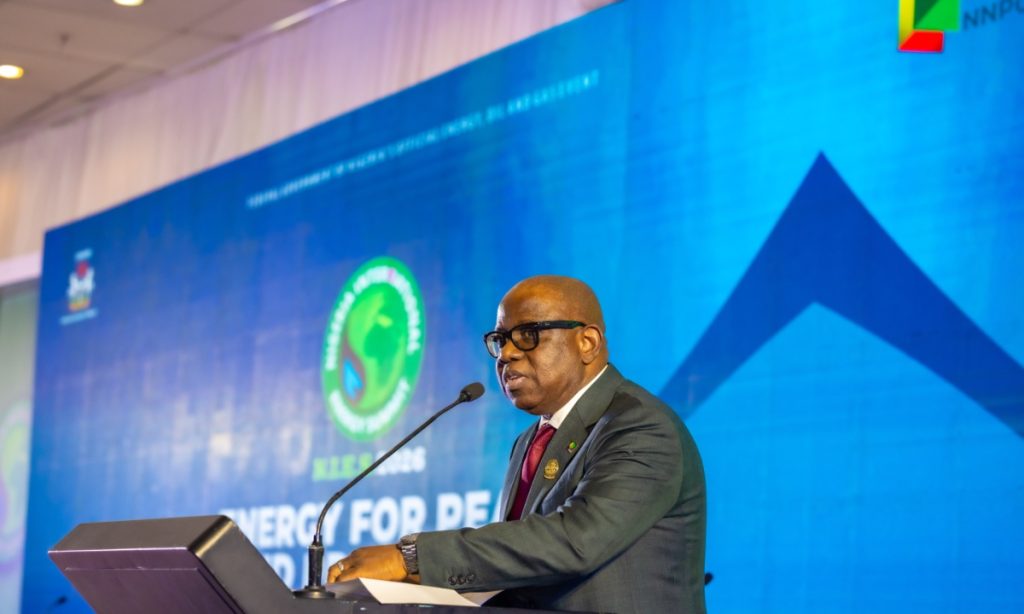
ABUJA — Nigeria’s path to prosperity is fundamentally tied to the strategic development of its vast natural gas reserves, according to the Group Chief Executive Officer of NNPC Ltd, Engr. Bashir Bayo Ojulari. Speaking at the Nigeria International Energy Summit (NIES) 2026 in Abuja, Ojulari positioned gas as the central pillar for the nation’s cleaner energy transition, industrialization, and export-driven economic growth.
Ojulari framed Nigeria’s challenge within what he called Africa’s “energy trilemma”—the simultaneous struggle with accessibility, affordability, and sustainability. He noted that while the continent is richly endowed with energy resources, over 600 million Africans still lack access to electricity. He asserted that Nigeria, with 37 billion barrels of crude oil and 209 trillion cubic feet of gas, is uniquely positioned to lead a solutions-driven narrative for the continent.
“Nigeria’s pathway to a prosperous future lies in our collective ability to leverage our resource abundance, especially as gas sits at the heart of our strategy,” Ojulari stated. “It is our bridge to a cleaner future, our engine for industrialization, and our foundation for export-led growth.”
He emphasized that Africa’s energy solution cannot be a generic model but must be “just, equitable, [and] people-centered,” focused on lifting populations out of poverty and powering industry, agriculture, and transport.
To transform this vision into reality, Ojulari detailed NNPC Ltd’s concrete actions. The company has launched a new Gas Masterplan to optimize gas utilization. Critically, it is aggressively advancing key infrastructure projects designed to create a national and regional gas grid. These include the Obiafu-Obrikom-Oben (OB3) pipeline, the Ajaokuta-Kaduna-Kano (AKK) pipeline, and the expansion of the Escravos-Lagos Pipeline System (ELPS).
“These projects are more than pipelines; they are highways for economic opportunity,” Ojulari explained, linking the infrastructure directly to industrial growth, job creation, and enhanced domestic power generation.
The initiatives signal Nigeria’s intent to leverage its hydrocarbon wealth not just for domestic stability but to assert itself as an emerging global energy powerhouse. By monetizing its gas resources through both domestic industrialization and exports, Nigeria aims to power Africa’s rise while contributing to global energy security, Ojulari concluded.




Comments are closed for this story.