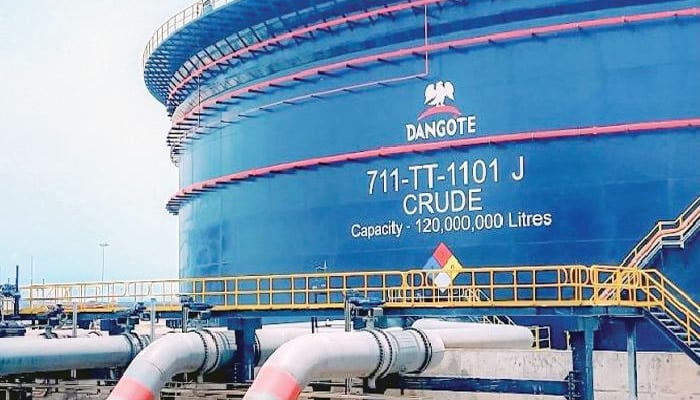
Dangote Refinery has cautioned that opting for coastal logistics to distribute its fuel could add approximately N75 per litre to petrol costs, potentially raising pump prices to near N1,000 per litre if marketers pass these expenses to consumers. The warning was part of a detailed statement released via the company’s official X account, outlining its production and distribution capabilities.
The refinery operates a gantry loading facility with 91 bays, capable of servicing up to 2,900 tankers daily and evacuating more than 50 million litres of petrol and 14 million litres of diesel around the clock. Dangote Refinery described gantry loading as the most cost-efficient method because it eliminates port charges, maritime levies, and other vessel-related fees that do not benefit end users. The company emphasized that marketers retain the freedom to choose between gantry and coastal loading, and it does not restrict evacuation methods. However, it noted that coastal logistics introduces substantial additional costs.
Should coastal transportation be widely adopted, the refinery calculated an extra annual expense of about N1.752 trillion, based on Nigeria’s average daily consumption of 50 million litres of petrol (PMS) and 14 million litres of diesel. The statement underscored that transferring these logistics costs directly impacts consumer prices.
The release also highlighted the broader economic benefits of local refining. Since the refinery began operations, diesel prices have dropped from around N1,700 to between N980 and N990 per litre, while petrol prices have fallen from approximately N1,250 to N839–N900 per litre. These reductions have alleviated pressure on foreign exchange reserves and contributed to naira stability.
Dangote Refinery’s clarification positions its inland gantry system as a key factor in maintaining lower fuel costs, contrasting it with the more expensive coastal shipping model traditionally used for imported products. The company’s data suggests that while distribution choices remain with marketers, the national economy and consumers could face significant financial strain if coastal logistics become prevalent.
The refinery’s statement reinforces the pivotal role of domestic fuel production in controlling prices and reducing import dependency. As Nigeria continues to adjust to expanded local refining capacity, the balance between distribution methods will remain a critical factor in determining final pump prices and overall energy cost stability.