
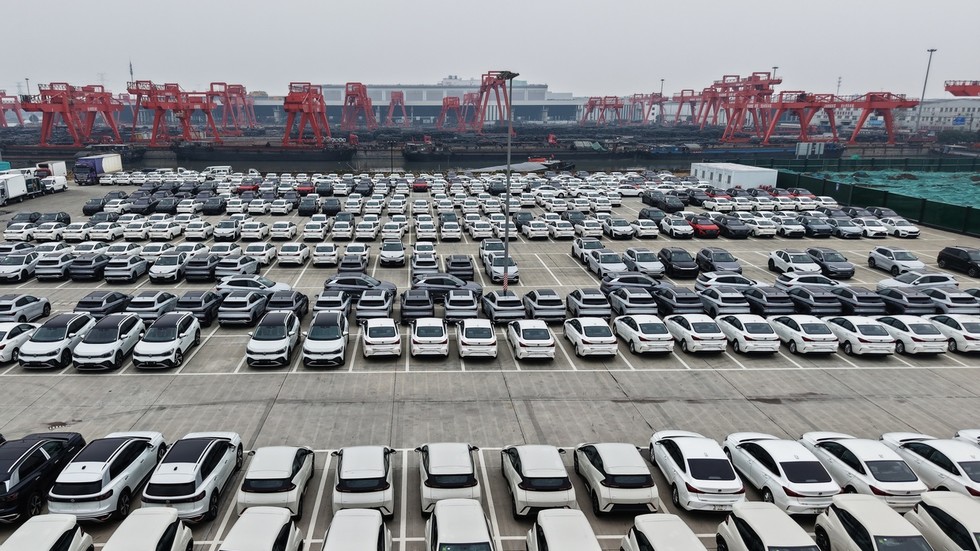
A group of US senators is pressing President Donald Trump to leverage the review of the North American trade pact to block Chinese electric vehicles (EVs) from entering Canada and Mexico. Five Democratic senators, in a letter to the US Trade Representative’s Office seen by Reuters, argue that the United States-Mexico-Canada Agreement (USMCA) must be strengthened to counter the competitive threat from Chinese automobiles.
The senators describe the economic and national security risks of Chinese vehicles in the North American market as an immediate threat, not a future possibility. Their request targets the USMCA’s mandatory review this year, a process that will determine whether the agreement, which replaced NAFTA in 2020, is extended or renegotiated. The appeal follows a long-standing US-China trade conflict marked by reciprocal tariffs and regulatory barriers that have already effectively excluded Chinese EVs from the US market through duties as high as 127.5%.
This pressure on Canada and Mexico coincides with Canada’s own recent shift. Last month, Prime Minister Mark Carney’s government secured a preliminary trade deal with China during a visit to Beijing. That agreement allows up to 49,000 Chinese-made EVs into Canada at a reduced tariff of 6.1%, a significant drop from the previous 100% rate. In return, China agreed to lower tariffs on key Canadian agricultural exports like canola seed.
The White House has maintained a hardline stance, with tariffs on Chinese EVs having been progressively raised. Actions taken by President Trump shortly after his inauguration in January 2025 elevated the total effective US import tariff to 127.5%.
Beijing has consistently criticized Washington’s measures as protectionist. China has accused the US of violating World Trade Organization rules and applying “double standards,” vowing to “fight to the end” in the trade dispute.
The senators’ move highlights a key tension in North American trade policy: the US objective of creating a unified front against Chinese industrial competition versus the individual trade pursuits of its USMCA partners. The outcome of the USMCA review will be closely watched for its impact on cross-border supply chains and the integration of Chinese manufacturing into the broader North American automotive sector.




Comments are closed for this story.