
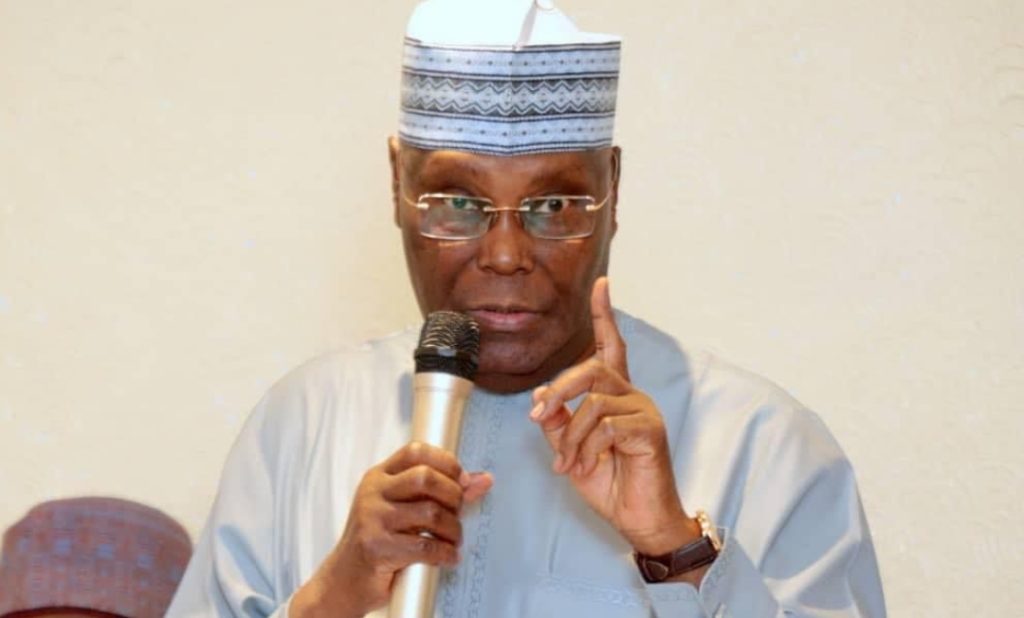
Former Nigerian Vice President Atiku Abubakar has warned that escalating human rights violations could trigger widespread unrest in the country. His statement follows a high-profile confrontation between security operatives and supporters of former Kaduna State Governor Nasir El-Rufai at Abuja’s Nnamdi Azikiwe International Airport on Thursday.
El-Rufai was intercepted by operatives of the Economic and Financial Crimes Commission (EFCC) upon arrival from Cairo, Egypt. The agency attempted to detain him and seized his international passport, an action that was met with resistance from bystanders and his supporters at the airport. Videos of the incident circulated widely on social media.
In response, Atiku visited El-Rufai on Thursday night to express solidarity. During the meeting, Atiku said the authorities should take note of the public’s reaction. “I hope they will learn from what they saw at the airport because it was people on their own that resisted the arrest,” he stated.
He cautioned that persistent disregard for civil liberties could have severe consequences. “What they don’t understand is that there could be a revolution in this country because people will no longer accept the violation of their human rights,” Atiku added, describing the airport incident as “absolutely uncalled for.”
The EFCC has not publicly commented on the specific grounds for attempting to apprehend El-Rufai, though the agency is known for investigating corruption and financial crimes among high-profile figures. El-Rufai, a prominent figure in Nigeria’s opposition political landscape, has previously faced scrutiny from anti-graft agencies.
Thursday’s events highlight the tense relationship between Nigeria’s security forces and political figures, often framed within broader accusations of selective enforcement. Atiku’s intervention elevates the airport standoff from a law enforcement action to a national debate about civic space and state power.
His warning about a potential revolution underscores deep-seated public frustrations over governance, economic hardship, and perceived institutional overreach. The spontaneous resistance at the airport is being interpreted by analysts as a significant indicator of public sentiment.
The situation poses a challenge for the administration of President Bola Tinubu, which must balance law enforcement with maintaining public order and respecting constitutional rights. How the government responds to this incident and similar future occurrences may significantly influence the nation’s political stability.
Atiku’s remarks are likely to resonate across political divides, adding pressure on authorities to ensure that security operations comply with legal protocols and avoid actions that inflame public anger. The incident serves as a stark reminder of the volatile intersection between enforcement agencies, political opposition, and a populace under economic and social strain.




Comments are closed for this story.