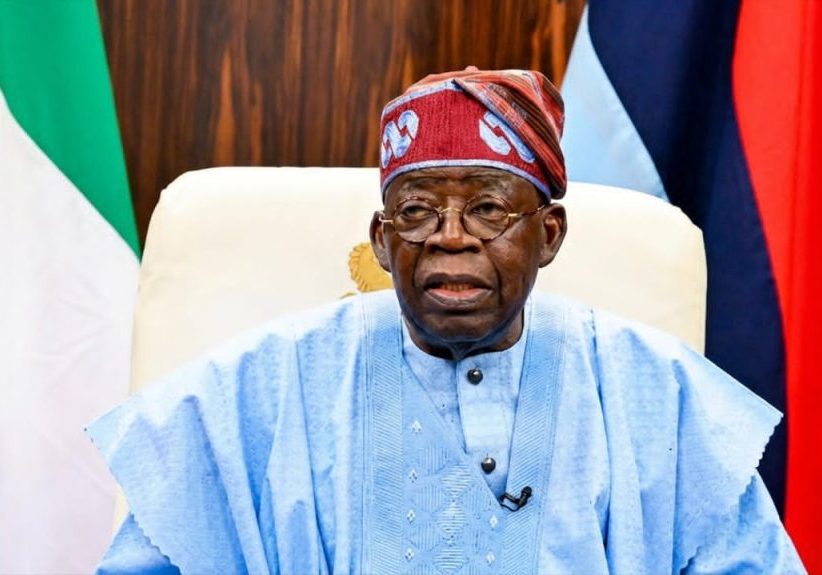
President Bola Tinubu will travel to Kano on Monday to formally welcome Governor Abba Kabir Yusuf into the All Progressives Congress (APC) at a ceremony scheduled for the Sani Abacha Stadium. The event, described by former presidential aide Bashir Ahmad on social media as a “massive gathering for the progressive family,” signifies a major political realignment in Nigeria’s second-most populous state.
Governor Yusuf’s entry into the APC follows his decision last month to abandon the New Nigeria Peoples Party (NNPP), from which he won the 2023 governorship election. His departure also signifies a split from his long-time political mentor, Rabiu Musa Kwankwaso, a national figure within the NNPP and a former Kano governor. The move reduces the NNPP’s influence in its traditional stronghold and bolsters the APC’s dominance in the crucial northwestern region.
The planned presidential reception is designed to consolidate Yusuf’s position within the ruling party, projecting unity and strengthening the APC’s grip on Kano’s political machinery. Analysts note that welcoming a sitting governor from the opposition reinforces the APC’s strategy of expanding its federal influence ahead of future electoral cycles.
Public reaction to the development has been mixed, reflecting the state’s contentious political landscape. On social media platform X, user @DeFiVoyant criticized the move, suggesting Yusuf’s political prospects were limited prior to the defection. Conversely, user @Autarkeia_ expressed support, congratulating the “Progressive family.” Another user, @TonyOrji8, directed criticism at the APC itself, accusing the party of corruption. These divergent views underscore the polarized nature of Nigerian politics and the personal loyalties that often define party affiliations.
Governor Yusuf’s shift comes after a complex 2023 election cycle in Kano, where the NNPP, in a tactical alliance with the main opposition Peoples Democratic Party (PDP), defeated the APC. His subsequent switch highlights the fluidity of coalition-building in Nigerian politics, where personal relationships and strategic calculations frequently override long-standing party allegiances.
The ceremony in Kano is more than a symbolic handshake; it represents a tangible shift in the state’s power dynamics. For President Tinubu, successfully integrating a key opposition figure enhances his administration’s narrative of a united, progressive front. For Governor Yusuf, the presidential endorsement secures his access to federal resources and political machinery, likely ensuring his administration’s stability until 2027.
The event concludes a weeks-long process that has redrawn the political map in Kano. It sets the stage for the governor to operate fully under the APC banner, while his former party, the NNPP, must recalibrate without its highest-ranking elected official in the state. The consolidation of the APC in Kano is expected to have lasting implications for governance and the 2027 electoral calculus in the northwest.