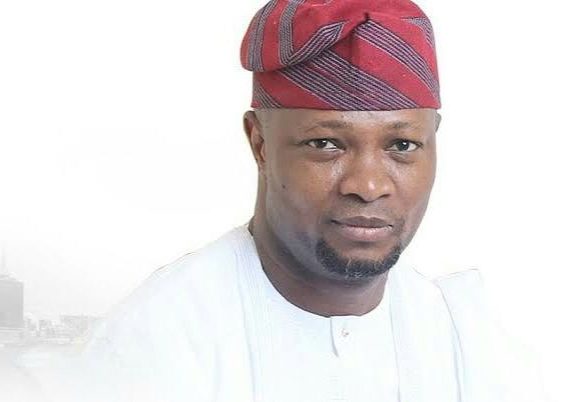
Former Nigerian Foreign Affairs Minister Bolaji Akinyemi has urged a critical review of the country’s democratic model, cautioning that the direct adoption of foreign systems has created significant governance challenges.
Speaking during an interview on Arise News, Akinyemi stated that Nigeria implemented a democratic framework from other nations without sufficiently adapting it to its unique socio-cultural context and historical realities. This mismatch, he argued, lies at the root of persistent issues in national administration and political stability.
He further contended that an excessive emphasis on partisan competition is undermining development. According to Akinyemi, politicians are frequently preoccupied with advancing party agendas rather than collaborating on national problem-solving. This dynamic, he said, results in policy delays and stalled progress across key sectors.
The former minister called for a fundamental shift in priorities, demanding that leaders place Nigeria’s collective interest above political party affiliations and personal ambitions. He advocated for a governance system that is genuinely reflective of the country’s diverse populace and capable of fostering unity, stability, and sustainable economic growth.
Akinyemi’s remarks have reignited a long-standing debate about electoral and constitutional reforms in Africa’s most populous nation. Nigeria returned to democratic rule in 1999 after decades of military governance, adopting a presidential system with a federal structure and a first-past-the-post electoral model, largely inspired by the United States and the United Kingdom.
Analysts note that despite regular elections, the system struggles with issues including ethnic and religious fragmentation, weak institution-building, and pervasive corruption. The dominant party system often encourages zero-sum politics, where oppositional rivalry can supersede national consensus on critical issues like security, infrastructure, and the economy.
The discussion around a possible system redesign touches on complex questions of identity, federalism, and power distribution. Proposals in past national conferences have included options for a parliamentary system, restructuring of states, or modified presidential terms, though none have gained sufficient political traction for implementation.
Akinyemi’s intervention adds weight to arguments that Nigeria’s political architecture may require indigenous solutions to effectively address its specific challenges. Observers suggest that any meaningful reform would necessitate broad, inclusive dialogue and a constitutional amendment process, both of which present considerable political hurdles.
The significance of this debate extends beyond Nigeria’s borders, offering a case study on the applicability of Western political models in culturally distinct societies. The outcome of this conversation could influence the nation’s trajectory toward more cohesive and effective governance in the years ahead.