
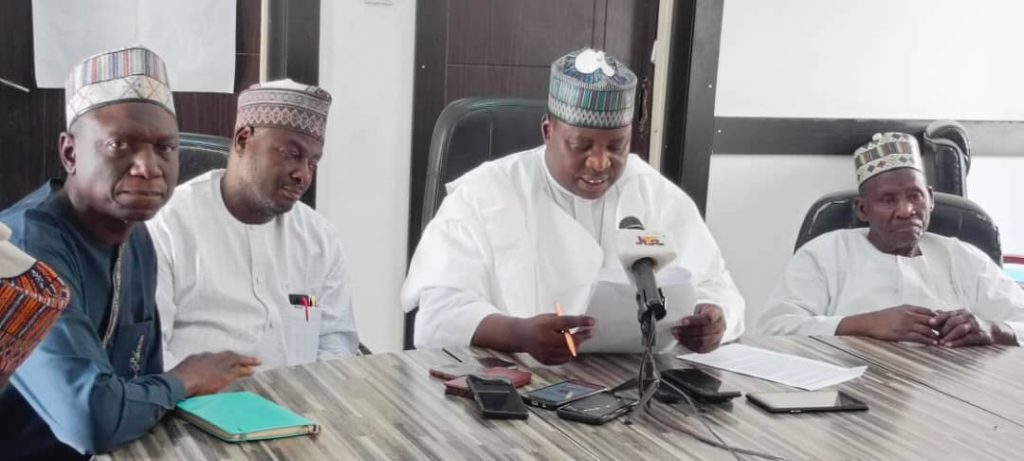
Bauchi State Slashes Out-of-School Children by 85% Through Community-Led Strategy
Bauchi State has reduced its population of out-of-school children by 85 per cent, from 1.7 million in 2019 to 216,000 in 2025, the State Universal Basic Education Board (SUBEB) announced. The dramatic decline is attributed to a coordinated, multi-sectoral strategy that placed community leadership at the core of enrolment and retention efforts.
The state had historically grappled with one of Nigeria’s highest rates of children outside formal education, a result of prolonged neglect, inconsistent enforcement of compulsory schooling laws, poverty, and socio-cultural barriers. According to SUBEB Permanent Secretary Abdulhamid Mohammed Jibrin, reversing this trend required deliberate reforms backed by evidence-based interventions.
A cornerstone of the approach was the active mobilisation of traditional and community authorities. Emirate councils, district heads, ward and village leaders were integrated into enrolment enforcement, daily attendance monitoring, and grassroots advocacy. This hyper-local involvement proved decisive; in Toro Local Government Area alone, over 35,000 previously out-of-school children were enrolled.
The government also launched targeted programmes to address equity, particularly for girls. The Adolescent Girls Initiative for Learning and Empowerment (AGILE) and Conditional Cash Transfer (CCT) schemes provided incentives that improved enrolment, retention, and transition rates for adolescent girls.
Parallel investments in infrastructure created a more enabling environment. The state established Mega Schools, Model Schools, and Smart Schools, rehabilitated existing facilities, and formally integrated Tsangaya and Qur’anic schools into the basic education system, aiming to provide safer, more inclusive learning spaces.
Jibrin noted that the influx of approximately 284,000 new learners has strained some school infrastructure and teacher capacity, underscoring the need for sustained investment in facilities, educator training, and learning materials.
He credited the milestone to collective action, recognising contributions from the state government, parents, traditional and religious leaders, local authorities, and education workers. The model, described as a “localised, evidence-based” approach, is presented as a potential template for other regions grappling with high out-of-school populations, while highlighting that long-term success depends on maintaining and scaling up the supporting systems.



Comments are closed for this story.