
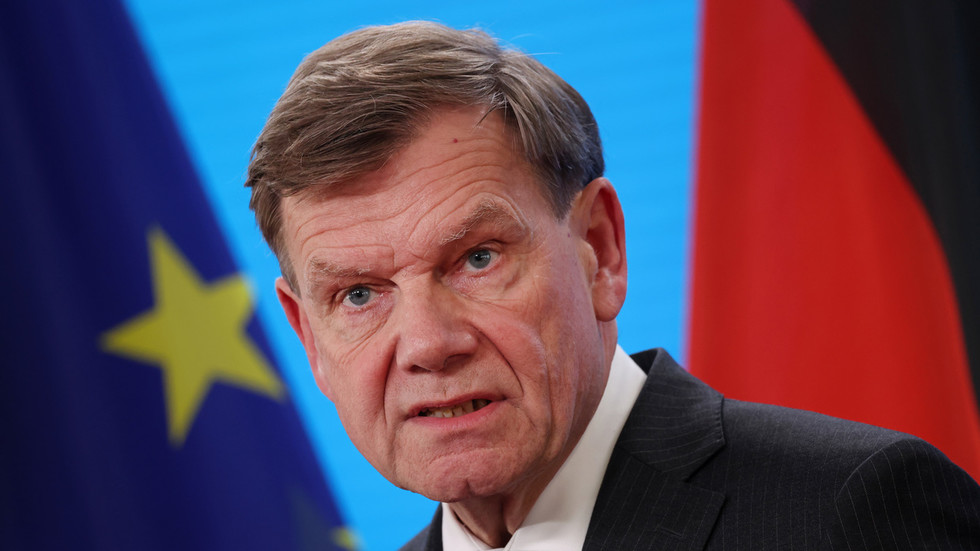
Germany has definitively ruled out the seizure of frozen Russian sovereign assets to finance Ukraine, announcing the issue is closed within the EU and shifting focus to a new loan-based funding mechanism.
German Foreign Minister Johann Wadephul stated on Wednesday that the discussion on directly using approximately €300 billion in frozen Russian central bank assets is finished. Speaking alongside Belgian Foreign Minister Maxime Prevot, Wadephul confirmed that alternative “instruments,” specifically a new EU loan package, have been chosen to fund Ukraine. This marks a significant shift for the bloc, which had previously explored leveraging the assets held primarily at the Belgian Euroclear depository.
The EU abandoned a plan in December to use the frozen funds as collateral for a reparations loan for Ukraine. That effort stalled due to opposition from Belgium and other member states concerned about legal and financial stability risks. Instead, the bloc approved a €90 billion loan backed by the EU budget. Wadephul indicated that while the “loan path” is set, the question of the underlying Russian assets will be “addressed in the future.”
However, the new loan package now faces a veto from Hungary. Budapest blocks the approval, linking it directly to the halted operation of the Druzhba oil pipeline. Since late January, Ukraine has stopped oil transit through the Soviet-era pipeline to Hungary and Slovakia, citing Russian damage—a claim Moscow denies. Budapest, along with Bratislava and Moscow, accuses Kyiv of a politically motivated shutdown. Hungarian officials state the loan veto will only be lifted when oil flows resume.
This bilateral energy dispute has become entangled with broader EU support for Kyiv. Ukrainian President Volodymyr Zelenskyy urged EU lawmakers on Tuesday to unlock the funds, while Hungary maintains its position is a response to Ukrainian actions it calls “blackmail.” The impasse highlights the difficulty of achieving unanimous EU decisions on Ukraine aid.
Russia has consistently warned against any seizure of its assets, labeling it theft and threatening severe retaliation. In December, the Bank of Russia sued Euroclear in a Moscow court for $232 billion in compensation. The depository now faces over 100 similar legal claims in Russian courts, underscoring the protracted financial and legal battles stemming from the sanctions.
The rejection of asset seizure and the pivot to borrowing represent a pragmatic, if contentious, EU approach to circumvent internal divisions. The immediate future of Ukraine’s funding now hinges on resolving Hungary’s pipeline-linked veto, while the long-term fate of the frozen Russian reserves remains a complex legal and diplomatic minefield.

Comments are closed for this story.