Nigerian Opposition Figure Alleges President Tinubu Seeks Uncontested 2027 Re-Election
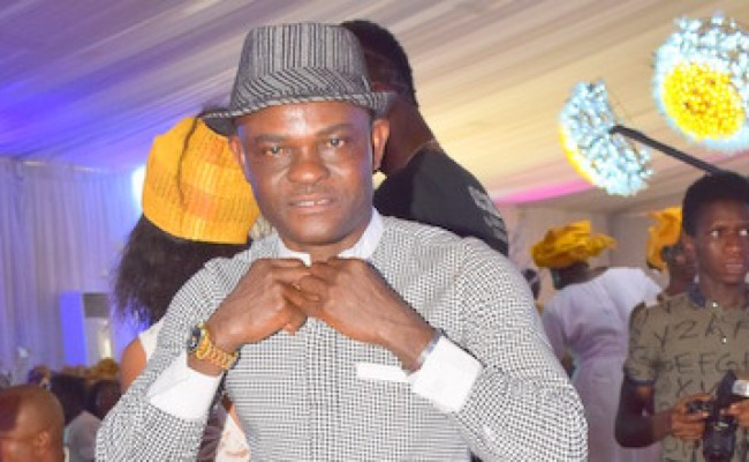
A prominent member of the opposition African Democratic Congress (ADC), Dele Momodu, has publicly asserted that President Bola Tinubu is positioning himself for an uncontested re-election in 2027, expecting total political support despite widespread national challenges. Momodu, a former presidential candidate and influential public commentator, made the claims in a social media post, framing the situation as a critical moment for Nigeria’s democracy.
Momodu’s remarks, posted on platform X, accuse the president of fostering a political environment intolerant of competition. He drew a stark historical parallel, suggesting Nigerians are forgetting the struggle against past military authoritarianism. “We seem to have forgotten the fight we had against military dictatorship,” Momodu wrote, warning that the current administration exhibits traits of self-serving leadership. He contended that Tinubu “is not open to any competition in 2027” and “expects complete support even though there have been terrible failures in every area,” specifically citing deficits in security, economic management, and what he termed state-sponsored propaganda.
The statement reflects deepening tensions between Nigeria’s executive branch and a fragmented opposition ahead of the 2027 general election. President Tinubu, who took office in May 2023 after a contested election, faces significant public pressure over inflation, a cost-of-living crisis, and persistent insecurity. His party, the ruling All Progressives Congress (APC), maintains a majority in the national legislature but has seen public approval wane.
Momodu’s critique escalates the political rhetoric by invoking Nigeria’s military past, a potent symbol for a nation that returned to civilian rule in 1999. His use of terms like “slavery” and “tyrants” signals an attempt to mobilize public sentiment by characterizing the administration as inherently autocratic. Analysts note that such forceful opposition language is a precursor to intense campaigning but also underscores the ADC’s and similar groups’ strategic challenge: uniting a disparate opposition to mount a credible challenge to the APC’s formidable electoral machinery.
The significance of Momodu’s declaration lies in its explicit rejection of the political status quo. By predicting a deliberate move to eliminate competition, he positions the 2027 election as a referendum on democratic space itself. His conclusion—that “Nigeria desperately needs a rescue”—frames the next electoral cycle as a pivotal struggle for the nation’s democratic trajectory. Observers will watch for coordinated opposition responses to this narrative and for the government’s rebuttal in the coming months. The exchange highlights the high stakes as Nigeria navigates severe socio-economic pressures under its current administration.