
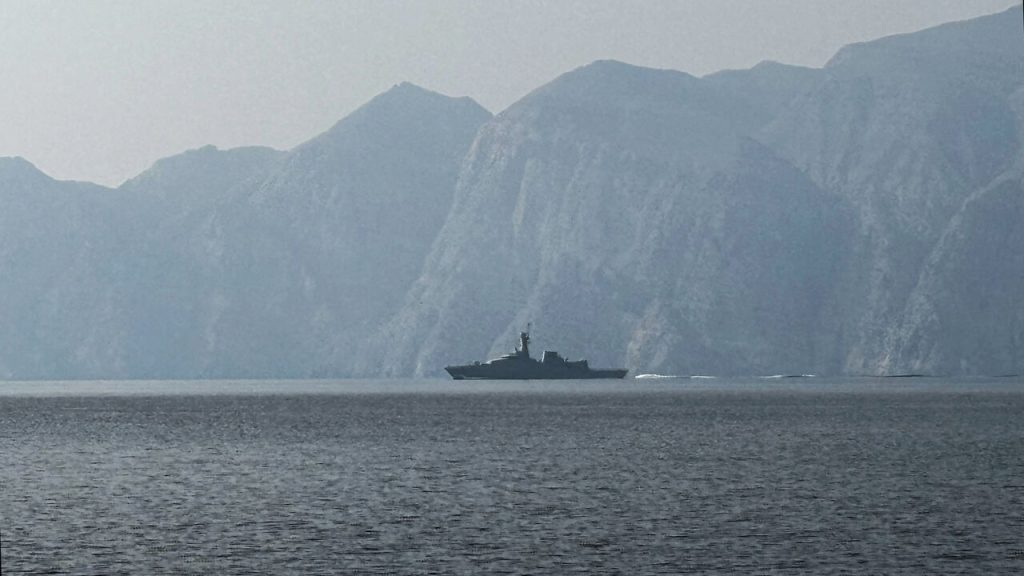
Iran has announced the closure of the Strait of Hormuz and stated it will engage any vessel attempting to transit the critical waterway, according to Iranian media reports. The declaration, if enacted, would represent an unprecedented escalation in regional tensions with immediate consequences for global energy security.
The Strait of Hormuz, a narrow chokepoint between Oman and Iran, connects the Persian Gulf to the Gulf of Oman and the Arabian Sea. At its narrowest, the entire strait is 33 kilometers (21 miles) wide, but the designated shipping lanes in each direction are a mere 3 kilometers (2 miles) wide. This geography makes the artery both vital and vulnerable.
Its strategic importance cannot be overstated. Approximately one-fifth of the world’s total oil consumption passes through the strait. Data from analytics firm Vortexa indicate that in the last year, an average of over 20 million barrels per day of crude oil, condensate, and refined fuels transited the passage. The disruption of this flow would trigger significant volatility in global oil markets.
The strait is the primary export route for key energy producers. All OPEC members bordering the Gulf—Saudi Arabia, Iran, the United Arab Emirates, Kuwait, and Iraq—rely on it for the vast majority of their crude oil shipments, with Asia as the principal destination. Furthermore, Qatar, a leading exporter of liquefied natural gas (LNG), sends nearly all of its LNG supply through this confined channel to global markets.
Iran’s threat directly challenges the principle of freedom of navigation in international waters and puts at risk the uninterrupted flow of hydrocarbons that power much of the world’s economy. The potential closure would force oil and gas tankers to undertake lengthy and costly alternative routes, tightening global supply and raising transportation costs.
The international community, particularly energy-importing nations and major shipping firms, is likely to monitor the situation with extreme concern. The immediate next steps involve diplomatic efforts to de-escalate the situation and practical assessments by naval forces regarding the enforcement of such a closure. The stability of global energy markets now hinges on the resolution of this high-stakes standoff in one of the world’s most strategic waterways.




Comments are closed for this story.