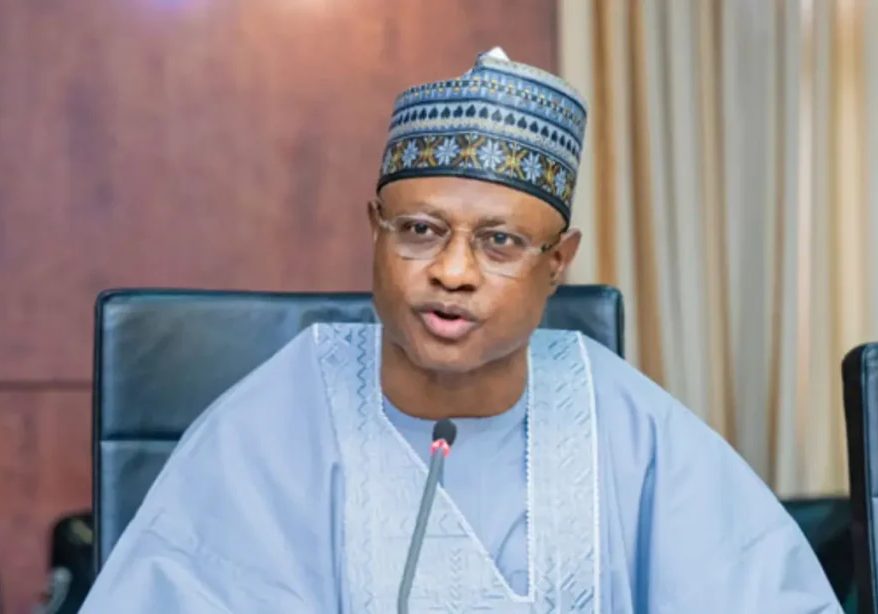
President Tinubu Nominates Lamido Yuguda as Deputy Governor of Central Bank of Nigeria
President Bola Tinubu has nominated Lamido Abubakar Yuguda for the position of Deputy Governor of the Central Bank of Nigeria (CBN), a appointment that requires Senate confirmation. The announcement, made via a statement from the President’s Special Adviser on Information and Strategy, Bayo Onanuga, cites Section 8(1) of the Central Bank of Nigeria Act, 2007, as the legal basis for the nomination.
This nomination follows the recent reassignment of the previous Deputy Governor, Bala Bello, who was appointed as Special Adviser to the President on Political Economy. In the statement, President Tinubu urged both officials to approach their duties with “renewed dedication, professionalism, and commitment to Nigeria’s economic stability and growth.”
Mr. Yuguda brings over four decades of experience in Nigeria’s financial sector to the role. Most recently, he served as Director-General of the Securities and Exchange Commission (SEC) Nigeria from 2020 to 2024, where he led regulatory reforms aimed at strengthening the nation’s capital market. Prior to his tenure at the SEC, he had a long and distinguished career at the CBN, having joined in 1984. He rose to become Director of the Reserve Management Department, a position he held for six years before retiring in 2016.
His background also includes international experience as an economist in the Africa Department of the International Monetary Fund (IMF) from 1997 to 2001. Educated at Ahmadu Bello University, Zaria, where he earned a B.Sc. in Accountancy in 1983, he later obtained a master’s degree in Money, Banking and Finance from the University of Birmingham, UK, in 1991. Professionally, he is a Fellow of the Institute of Chartered Accountants of Nigeria (ICAN) and a Chartered Financial Analyst (CFA) charterholder.
If confirmed by the Senate, Yuguda will assume a key leadership role at the apex bank during a critical period. Nigeria’s monetary authorities are currently implementing aggressive reforms focused on stabilising the national currency, the naira, curbing persistent inflation, and rebuilding broader investor confidence in the economy. His appointment is seen as reinforcing the CBN’s technical capacity as it navigates these significant macroeconomic challenges. The next step in the process is the Senate’s consideration and approval of the nomination.