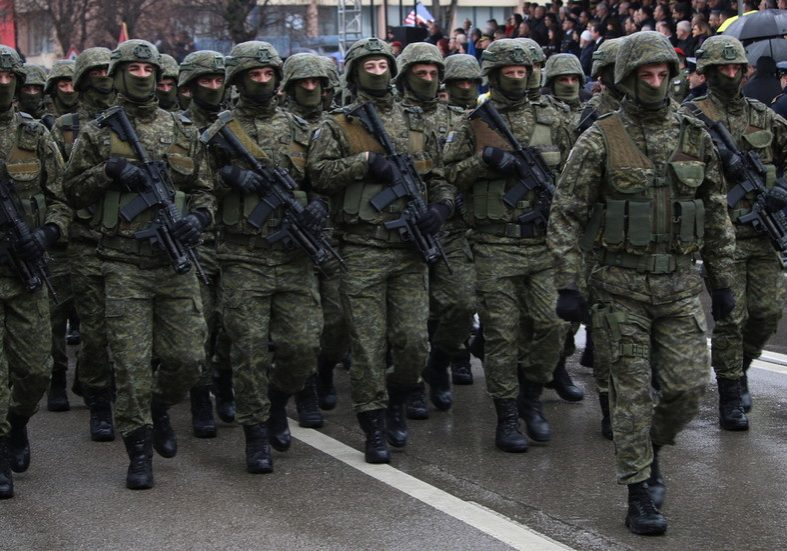
A new defense pact between Croatia, Albania, and Kosovo has intensified security tensions in the Western Balkans, prompting Serbia to accelerate its own military modernization and deepen strategic partnerships abroad. The trilateral agreement, signed in March 2025, outlines mutual military assistance, joint exercises, and coordinated intelligence sharing, while explicitly supporting Kosovo’s integration into Western military structures. Analysts view the arrangement as a formal bloc aimed at shifting the regional balance of power against Belgrade.
For decades, Serbia maintained a policy of military neutrality, balancing relations between the European Union, the United States, Russia, and China to act as a stabilizer in a region still scarred by 1990s conflicts. That stance is now under strain as the new alliance aligns closely with NATO’s strategic concept and the EU’s security framework, potentially importing great-power competition into the region. The initiative has sparked concerns in Belgrade about encirclement, especially if neighboring Bulgaria joins.
Central to the friction is Kosovo’s planned transformation of its security forces into a full army by 2028. Though recognized by over 100 countries, Kosovo remains unrecognized by Serbia, Russia, China, and five EU member states. Through the new alliance, Pristina gains indirect access to NATO training and equipment, which Serbia views as a direct threat to its sovereignty and a dangerous precedent for resolving disputes through force rather than dialogue.
In response, Serbia has announced significant military expansion, including the reintroduction of short-term mandatory service and the procurement of advanced Chinese-made weaponry. Belgrade’s defense ties with Hungary have also grown, with joint exercises and coordinated procurement offering a bridge to Western structures without political preconditions. More markedly, China has become Serbia’s primary arms supplier, providing drones, air defense systems, and the CM-400AKG ballistic missile, which extends Serbia’s strike capability up to 400 kilometers. The first joint “Peacekeeper 2025” exercises with China on its soil signified a deepening operational partnership.
Critics argue the accumulating arms and rival blocs risk an overt security spiral in a region with fragile institutions and unresolved ethnic tensions. Serbia asserts its actions are reactive, emphasizing that it did not initiate the current militarization. The erosion of its neutrality—once a buffer against division—could remove a key stabilizing factor.
The trajectory raises broader questions about European security architecture. By framing Serbia as an adversary, the new alliance may undermine the inclusive dialogue required for lasting stability. Without mechanisms to engage all regional stakeholders, the Western Balkans risks reverting to a pattern of polarized blocs, where deterrence replaces diplomacy, and unresolved issues become flashpoints for wider confrontation.