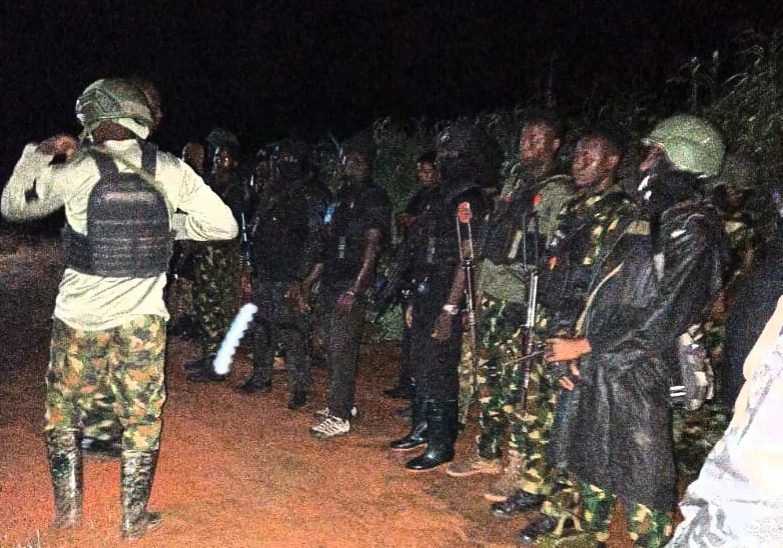
The United States military has announced it will impose a blockade on all Iranian ports starting Monday, following the collapse of high-level talks between Washington and Tehran in Pakistan. The move comes after President Donald Trump accused Iran of refusing to abandon its nuclear ambitions, a sticking point that derailed negotiations aimed at ending the months-long regional conflict.
In a statement, US Central Command said the blockade would be enforced “impartially against vessels of all nations” entering or departing Iranian ports along the Arabian Gulf and Gulf of Oman, beginning at 1400 GMT. However, vessels transiting the Strait of Hormuz to and from non-Iranian ports will not be impeded.
Trump, posting on his Truth Social platform, confirmed the military’s plan, framing it as a measure to clear the strait of mines and reopen it to shipping. “Any Iranian who fires at us, or at peaceful vessels, will be BLOWN TO HELL!” he wrote, escalating his rhetoric after earlier threatening to block all ships attempting to enter or exit the strait.
Iran’s Revolutionary Guards had warned they control traffic through Hormuz and would trap any challenger “in a deadly vortex.” Iranian officials, including parliament speaker Mohammad Bagher Ghalibaf, rejected the threat, with navy chief Shahram Irani calling it “ridiculous.”
The breakdown of talks—the highest-level US-Iran dialogue since the 1979 Islamic Revolution—has dashed hopes of a permanent ceasefire. The war, triggered by Israeli and US strikes on Iran in late February, has killed thousands and disrupted global markets. Oil prices surged nearly eight percent Monday, with both WTI and Brent crude topping $100 a barrel.
Iranian Foreign Minister Abbas Araghchi blamed the failure on “maximalism, shifting goalposts, and a blockade,” saying the two sides were “just inches away” from a deal. US Vice President JD Vance, who led the American delegation, said Washington had made its “final and best offer” and would wait to see if Iran accepted.
The fragile two-week ceasefire, brokered last week, is now at risk. Mediator Pakistan said it would continue facilitating dialogue but urged both sides to honor the truce. Meanwhile, violence persists in Lebanon, where Israeli strikes on Hezbollah positions have killed hundreds, according to local health authorities. Lebanese and Israeli officials are scheduled to meet in Washington on Tuesday.
The Strait of Hormuz, a critical artery for global oil and gas shipments, has already seen restricted traffic under Iranian control. A US blockade, experts warn, could effectively resume hostilities and further destabilize the region.