
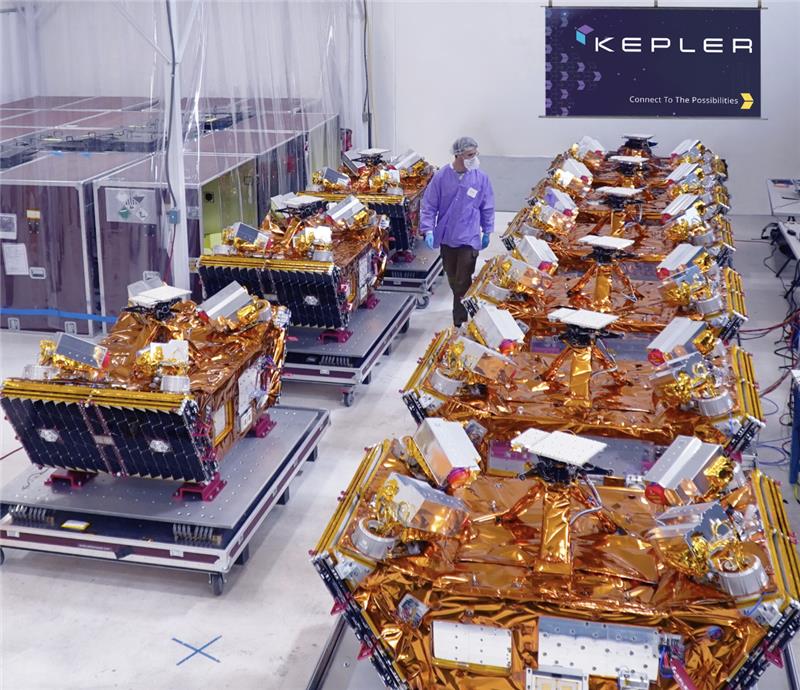
The space-based computing sector is making significant strides, exemplified by Canada’s Kepler Communications, which has deployed the largest orbital compute cluster to date. Launched in January, this system features 40 Nvidia Orin edge processors distributed across 10 operational satellites, all interconnected through laser communications links. While the concept of large data centers in orbit, championed by companies like SpaceX and Blue Origin, remains a long-term vision, the immediate focus is on processing data at the point of collection. This strategy enhances the responsiveness of space-based sensors utilized by both private firms and government agencies.
Kepler Communications positions itself as an infrastructure provider rather than a traditional data center operator. The company aims to offer network and processing services to other satellites, drones, and aircraft. Recently, Kepler announced a partnership with Sophia Space, a startup that is developing passively-cooled space computers. This innovative technology addresses a critical challenge for orbital data centers: effectively managing heat generated by powerful processors without relying on the weight and expense of active cooling systems. Under this agreement, Sophia will upload its operating system to one of Kepler’s satellites and conduct tests across six GPUs on two spacecraft, marking a significant first for in-orbit computing.
This collaboration not only showcases the practical utility of Kepler’s network but also represents a notable milestone in the evolution of space-based computing. Currently, Kepler processes data that is uploaded from the ground or collected by hosted payloads on its satellites. As the sector continues to mature, the company anticipates expanding its services by linking with third-party satellites. The initial proving ground for orbital data centers will be edge processing, which involves analyzing data close to its source. This model sets companies like Kepler and Sophia apart from larger entities that focus on massive, centralized data centers.
Kepler’s CEO, Mina Mitry, underscores the significance of distributed GPUs optimized for inference workloads, which ensures efficient utilization of power and resources. The implications of this technological advancement extend beyond the realm of computing. With increasing regulatory and environmental pressures on terrestrial data centers, space-based alternatives are becoming more appealing. Recent developments, such as Wisconsin’s ban on new data center construction, highlight the shifting landscape and the potential for orbital solutions. As these technologies are validated in orbit, the sector may experience rapid evolution, transitioning from niche applications to broader adoption in the coming decade.



Comments are closed for this story.