
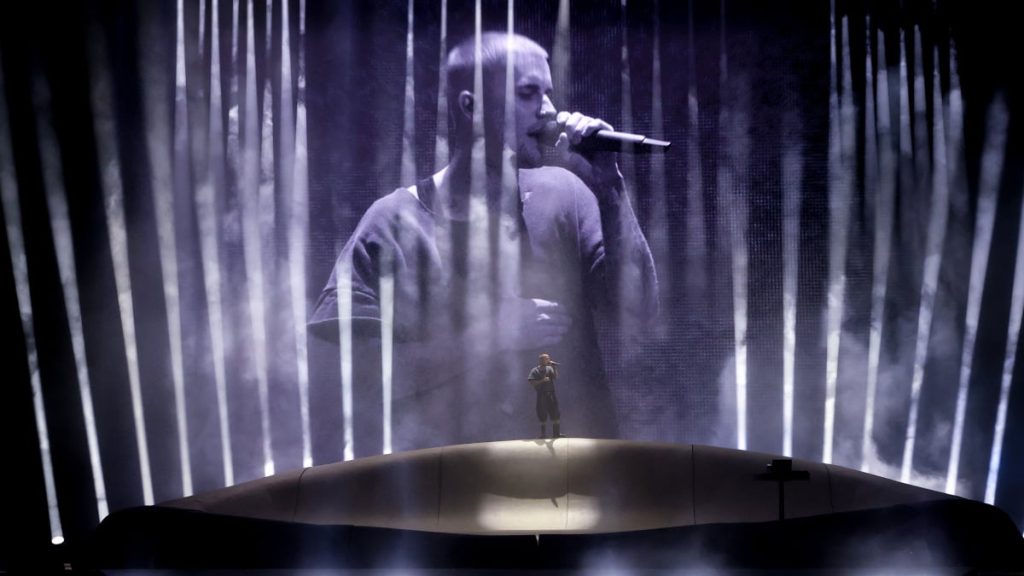
At Coachella, Justin Bieber delivered a performance that challenged the expectations typically associated with festival headliners. Instead of presenting a grand spectacle filled with elaborate staging and pyrotechnics, he opted for a more personal approach. He opened a laptop, accessed YouTube, and sang alongside videos of his younger self. Midway through his 90-minute set, Bieber began streaming old clips of himself performing iconic songs such as “Baby,” “Favorite Girl,” “Never Say Never,” and “Beauty and a Beat.” The audience watched a 12-year-old Bieber sing “So Sick” by Ne-Yo in a grainy 2007 YouTube video—one of the clips that helped launch his career. This upload, nearly 20 years old, evoked a time when YouTube was a platform where raw talent could be discovered organically, before the rise of algorithms and influencer culture transformed the internet.
Bieber’s performance was deeply meta; he sang along with YouTube while the platform streamed his set live to millions around the world. He occasionally addressed the at-home audience, creating an intimate, almost conversational atmosphere. Dressed in a hoodie and joined by a few guests—including the Kid LAROI, Dijon, Tems, Wizkid, and Mk.gee—Bieber relied on his voice and a few digital windows rather than relying on spectacle. While some viewers found the set understated compared to the elaborate productions typical of Coachella headliners, others perceived it as a confident and emotional statement. His voice was in excellent form, and his decision to revisit his internet history felt less like mere nostalgia and more like an act of reclaiming his own narrative.
By revisiting these digital artifacts, Bieber appeared at peace with the child the internet once made famous. The performance also underscored how celebrity has evolved in the digital age. Bieber is among the last pop superstars whose rise is closely tied to an earlier version of the internet, where bedroom covers could lead to global fame. In contrast, today’s stars are often more fragmented, niche, and driven by algorithms. By logging into his own internet history, Bieber transformed the stage into a living archive, inviting the audience to join him in exploring the many versions of himself preserved online. Ultimately, Bieber’s Coachella set transcended the boundaries of a typical concert; it served as a meditation on identity, memory, and the internet’s role in shaping modern celebrity.




Comments are closed for this story.