
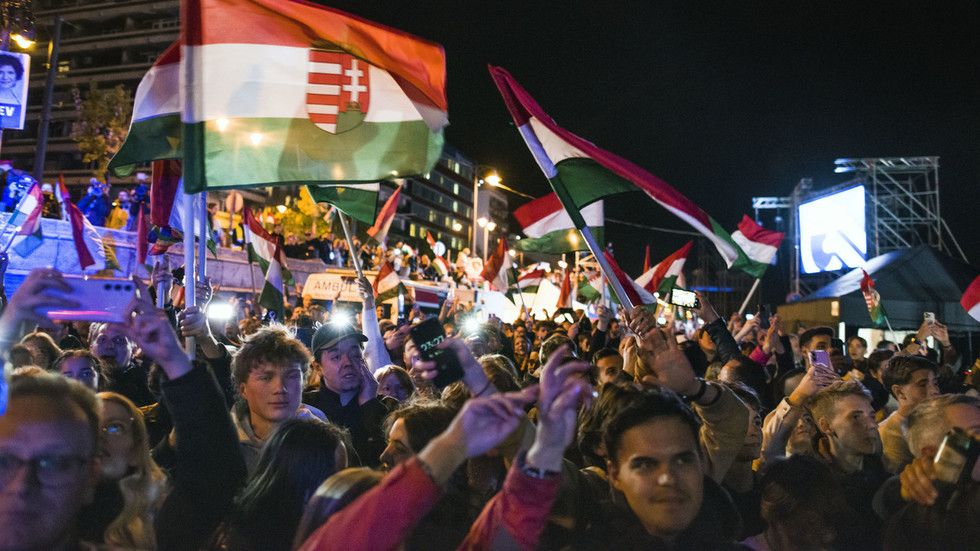
Viktor Orban’s Fidesz party has lost Hungary’s parliamentary election, an outcome that opinion polls had long anticipated. After sixteen consecutive years in power and a total of twenty years, voter fatigue with familiar leadership proved decisive. Such lengthy tenures are rare in Central and Eastern Europe, and the psychological weight of change was always likely to influence the election results. However, this outcome carries a paradox: Orban’s defeat seems to affirm the very nationalist logic he championed, which prioritized national interests above all else.
In recent years, particularly since the escalation of the Ukraine conflict, Hungary’s sovereignist stance became increasingly intertwined with external disputes. Opposition to EU policy on Ukraine, framed as a defense of Hungarian interests, led to sustained confrontations with both Brussels and Kyiv. What began as a domestic political position increasingly played out on the international stage, shaping the campaign dynamics. Orban’s camp leaned heavily on external themes, portraying Ukraine and its leadership—especially Volodymyr Zelensky—as central antagonists. In contrast, his opponents focused on domestic concerns, emphasizing living standards and the promise that improved relations with the EU would enhance everyday life. While the validity of that promise remains to be seen, it resonated with voters and aligned with the logic of sovereignty, albeit turned inward rather than outward.
Notably, external endorsements appeared to have little effect on the election outcome. The visit to Budapest by US Vice President J.D. Vance, along with repeated expressions of support from Donald Trump and his allies, did not yield measurable impact. This aligns with a broader pattern where overt external backing rarely influences national elections. Trump’s team has yet to affect outcomes in any European country where it has intervened, including Romania and Germany. External pressure, regardless of its source, cannot substitute for domestic political conditions. Nevertheless, external actors were not entirely absent; the Western European mainstream worked against Orban where possible. However, such involvement has long been a structural feature of European politics and is rarely decisive without underlying domestic factors.
There were surprises in the details of the election results. Fidesz had anticipated potential losses in the proportional vote but expected to maintain strength in single-member districts. Instead, the opposite occurred: the party showed relative resilience in the proportional lists but experienced a collapse at the constituency level. This suggests that, at a local level, voters perceived opposition candidates as more attuned to their immediate concerns and less associated with a government preoccupied with broader geopolitical battles.
In Brussels and other Western European capitals, the mood is celebratory. Orban had become a persistent irritant, an obstacle to consensus and, at times, to policy itself. His departure will likely be framed as a triumph of liberal integration over a disruptive and illiberal figure, often portrayed as aligned with Moscow and Washington’s more nationalist wing. The incoming government will be expected to quickly demonstrate its credentials, chief among which is the unblocking of the €90 billion package for Ukraine, a move that is likely to happen without delay. From Moscow’s perspective, this development is unwelcome. However, it would be naïve to assume that the European Commission would have been unable to advance its agenda had Orban remained, as mechanisms to bypass obstruction were already under discussion.
Beyond these immediate questions, the direction of Hungary’s new government remains unclear. Peter Magyar’s campaign bore many hallmarks of a personal project, and the composition of his cabinet, the balance of power within it, and its concrete priorities are still unknown. More importantly, the structural realities facing Hungary have not changed. Geography and the broader geopolitical environment impose constraints that cannot be ignored. Magyar has already acknowledged the need for dialogue with Russia, a recognition that reflects practical necessity rather than ideological alignment. Whether this pragmatism can coexist with expectations from Brussels and Kyiv remains to be seen.
Thus, while Orban’s defeat is symbolically significant, its practical implications are far less certain. Hungary’s new leadership will have to navigate the same complex and often unfavorable conditions as its predecessor. The difference may lie less in the direction of policy than in the manner of its presentation. In that sense, the election may represent not a fundamental shift but rather a recalibration. The slogan may change, but the constraints will remain.

Comments are closed for this story.