
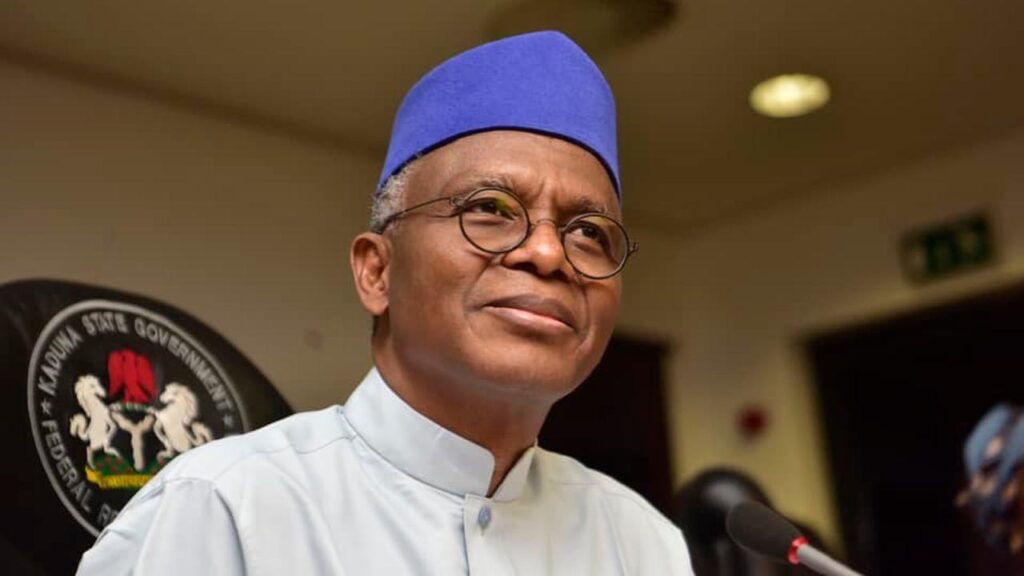
The Federal High Court has granted bail to former Kaduna State Governor Nasir El-Rufai, who is currently facing corruption charges brought by the Independent Corrupt Practices and Other Related Offences Commission (ICPC). The court did not disclose the specific conditions of the bail at the time of the ruling. El-Rufai’s release occurred just hours after he appeared before the Kaduna State High Court under tight security for the continuation of proceedings regarding his bail application in a separate but related corruption case also initiated by the ICPC. The heightened security at the court premises during the proceedings reflected the significant public and political interest in the case, and journalists were barred from accessing the courtroom.
The case had previously been delayed when the prosecution introduced an amended nine-count charge against the former governor. Initially, the charges included one Amadu Sule as a co-defendant; however, the revision made El-Rufai the sole defendant. Ubong Akpan (SAN), counsel for the defendant, stated that the defense team was served the amended charges in court without prior notice, which necessitated an adjournment. Justice Darius Khobo subsequently postponed the matter to April 14, 2026, for the hearing of the bail application, which has now been granted.
The charges against El-Rufai stem from his tenure as governor and include allegations of inducing the Kaduna State Government to release approximately N11 billion to an unregistered entity for a light rail project that was never executed. The ICPC also alleged that he approved and received about N289.8 million as severance allowance, exceeding the legally permitted amount. Additional allegations include the mismanagement of over $1.08 million from a World Bank loan, the unlawful award of a N4.6 billion CCTV contract in Kaduna metropolis in violation of procurement laws, and conspiracy to bribe federal investigators. El-Rufai has denied all allegations. Furthermore, he is facing a separate 10-count charge before the Federal High Court, where he was previously arraigned before Justice Rilwan M. Aikawa on charges related to money laundering, as well as the conversion and possession of public property.


Comments are closed for this story.