
World Expands Human Verification Tech Beyond Crypto Roots
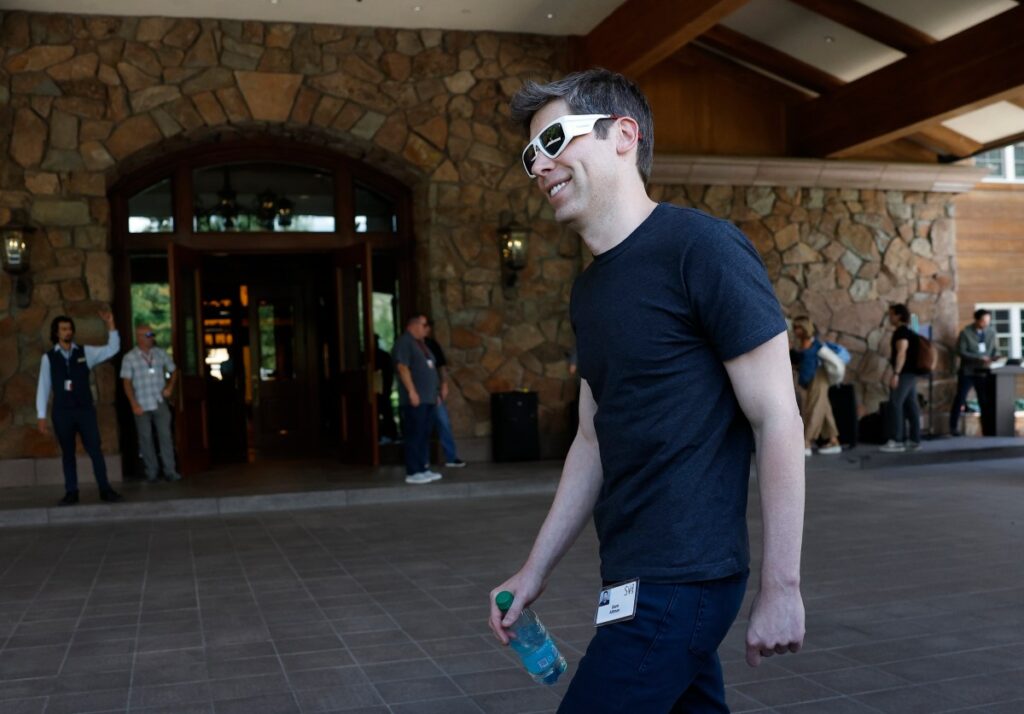
At a waterfront venue in San Francisco, Tools for Humanity (TFH) unveiled its latest push to embed human verification technology across digital services, moving well beyond its origins as Worldcoin. The company, co-founded by Sam Altman, announced a series of integrations designed to distinguish real people from AI agents and bots in areas ranging from dating apps to concert ticketing.
Speaking to a packed audience at The Midway, Altman warned that as AI-generated content overtakes human output, verifying authentic human presence online will become essential. “We are heading to a world where there’s going to be more stuff generated by AI than by humans,” he said. “I’m sure many of you have had moments where you’re like, ‘Am I interacting with an AI or a person, or how much of each, and how do I know?'”
World’s solution relies on a device called the Orb, which captures an iris scan to generate a unique, anonymous cryptographic identifier—what the company calls a “verified World ID.” This identifier enables what TFH terms “proof of human” authentication, allowing services to confirm a real, living user without compromising privacy. The underlying technology uses zero-knowledge proof-based authentication, ensuring that personal data remains protected.
The company announced a major expansion of its Orb network in New York, Los Angeles, and San Francisco, alongside a new remote verification option where users can request an Orb visit. To address scalability challenges, World is also introducing tiered verification levels: the highest tier remains Orb-based, a mid-tier uses anonymized government ID scans via NFC, and a low-friction option involves simple selfie checks processed locally on users’ devices.
Among the most prominent integrations is with Tinder, which will roll out World ID verification globally after a successful pilot in Japan. Verified users will display a World ID emblem on their profiles. In entertainment, World is launching Concert Kit, a feature that reserves tickets for verified humans to prevent scalper bots, with initial partnerships including 30 Seconds to Mars and Bruno Mars.
For business applications, World is integrating with Zoom to combat deepfake threats on video calls and with DocuSign to authenticate digital signatures. The company is also preparing for the rise of AI agents with “agent delegation,” allowing users to grant verified World IDs to AI tools acting on their behalf. A beta integration with identity firm Okta ensures that when an agent acts, websites can confirm it is operating under a verified human’s authority.
While selfie-based verification offers convenience, TFH acknowledges its limitations in security compared to biometric methods. Nonetheless, the company positions its multi-tiered approach as adaptable to varying security needs across industries.
With these moves, World is positioning itself as a foundational layer for trust and identity in an increasingly AI-saturated digital landscape, aiming to become the standard for proving human presence online.



Comments are closed for this story.