
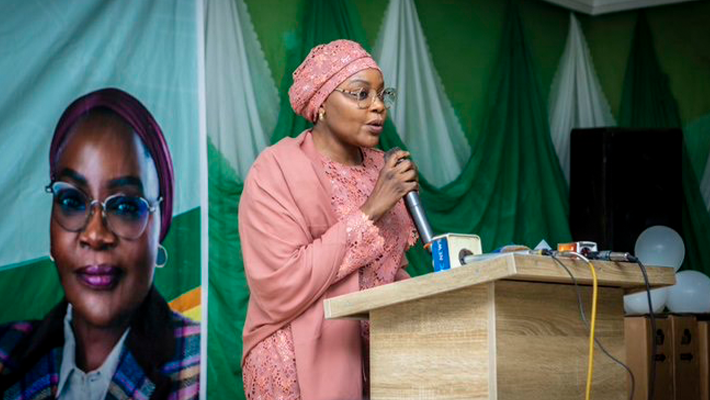
The Universal Basic Education Commission (UBEC) reported that 8.7 million learners across Nigeria have benefited from improved learning conditions and instructional materials as part of ongoing reforms in the basic education sector. Dr. Aisha Garba, UBEC’s Executive Secretary, disclosed this figure during the opening ceremony of the 29th Quarterly Meeting of UBEC Management with Executive Chairmen of State Universal Basic Education Boards (SUBEBs) in Abuja. The event, themed “Accelerating Basic Education Performance Through Digitally Enabled Coordination,” brought together key stakeholders to assess progress and chart the future of basic education delivery.
Garba explained that these achievements stem from the coordinated implementation of reforms under the 2025–2031 Strategic Blueprint, which aims to strengthen education delivery nationwide. She noted that more than 244,000 teachers have been trained in inclusive pedagogy and digital literacy to improve teaching quality and learning outcomes. According to Garba, UBEC’s renewed approach has repositioned the commission beyond a funding institution to a system enabler focused on alignment, accountability, and measurable impact across states. “Over the past year, we have entered a decisive phase in the evolution of the Universal Basic Education programme,” she said. “Throughout 2025, our focus shifted from diagnosing systemic challenges to implementing coordinated, large‑scale reforms under the 2025–2031 Strategic Blueprint. This transition reflects our renewed role, not only as a funding institution but also as a systems enabler, driving alignment, strengthening delivery, and ensuring that impact is felt across all states.”
She added that sustained data‑driven advocacy enabled the commission to unlock over N100 billion in previously unaccessed matching grants, with 30 states and the Federal Capital Territory currently accessing basic education funds. Revised Matching Grants Guidelines have been finalised to ensure transparency, efficiency, and improved utilisation of education resources. Procurement performance also improved significantly, recording a 95 percent completion rate for 2024 projects and resulting in timely delivery of interventions nationwide.
Garba emphasized that digitisation remains central to UBEC’s reform agenda through the Digitalisation of Public Schools Initiative, implemented in collaboration with the Federal Ministry of Education. The initiative has expanded access to digital learning platforms, strengthened teachers’ digital capacity, and enhanced classroom instruction with interactive content. She urged SUBEB chairmen to institutionalise digital systems in planning, monitoring, and implementation processes to strengthen accountability and improve learning outcomes.
Also speaking at the event, Kwara SUBEB Chairman Shehu Adaramaja stressed the urgent need for education stakeholders to adopt digital tools to enhance coordination and policy implementation in Nigeria’s basic education sector. He warned that fragmented communication and delayed processes can weaken even well‑designed policies, making digital tools no longer optional. UNICEF Education Manager Jutaro Sakamoto called for the training and retraining of teachers to boost performance and pledged UNICEF’s continued support to the universal basic education sub‑sector in the country.




Comments are closed for this story.