
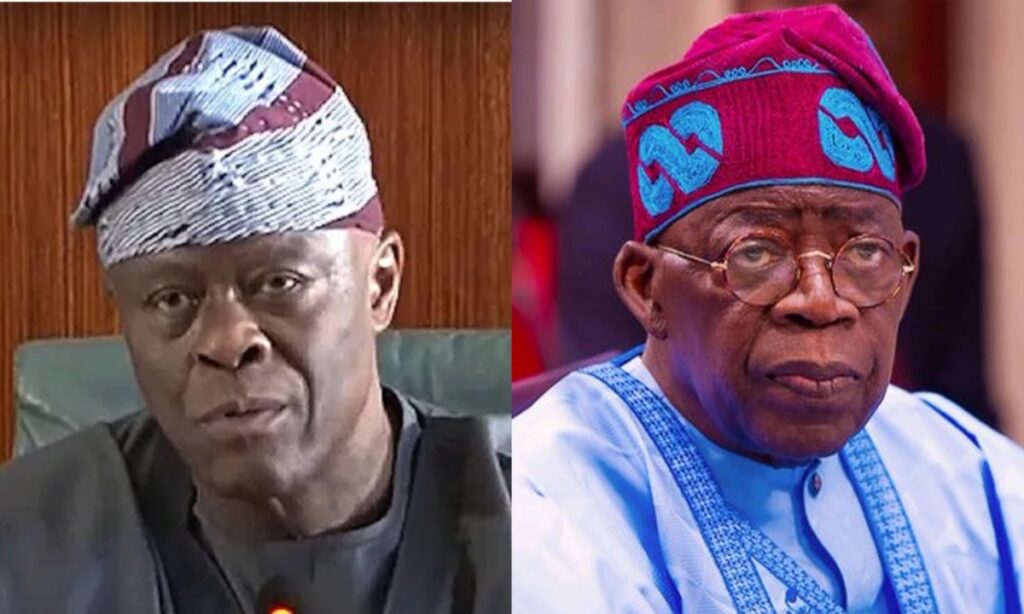
President Bola Ahmed Tinubu has removed Wale Edun as Nigeria’s Minister of Finance and appointed Taiwo Oyedele in his place, alongside a similar change in the Ministry of Housing and Urban Development. The reshuffle was announced by the Secretary to the Government of the Federation, Senator George Akume, who described it as an exercise of the President’s constitutional powers but gave no reasons for the move.
Edun had overseen the government’s “Renewed Hope” economic reforms, which included ending fuel subsidies and liberalising the exchange rate. Official figures claim these measures helped the economy grow to 4.07 percent in the fourth quarter of 2025, up from 2 percent in 2023, and reduced inflation from 22.04 percent to 15 percent. Nevertheless, many Nigerians have yet to feel tangible relief, as the cost of living, transportation and food prices remain high.
The timing of Edun’s departure is notable. It comes shortly after the International Monetary Fund downgraded Nigeria’s growth forecast to 4.1 percent, citing pressures from global shocks linked to the Middle East conflict. Edun had only recently returned from the World Bank/IMF Spring Meetings in Washington, where he assured that Nigeria would not seek an IMF bailout despite external pressures.
Financial markets reacted swiftly. The naira weakened against the dollar, closing at N1,350.74 per $, and stocks on the Nigerian Exchange Limited recorded a decline in daily gains.
Professor Godwin Oyedokun of Lead City University said the reshuffle should be viewed from both strategic and economic‑stability perspectives. He noted that such changes can signal a government’s willingness to reassess its economic direction and inject renewed energy into policy implementation, but cautioned that abrupt or poorly explained decisions risk undermining investor confidence by creating uncertainty about policy continuity. Oyedokun emphasized that investors care more about the coherence, predictability and credibility of government policies than about individual officeholders. He urged the government to prioritize transparency and consistency in its economic policies following the transition, noting that these factors will ultimately determine how both local and foreign investors respond to the leadership change.
The reshuffle comes at a sensitive moment for Nigeria’s economy, as the government seeks to balance reform efforts with public expectations and global economic pressures.




Comments are closed for this story.