
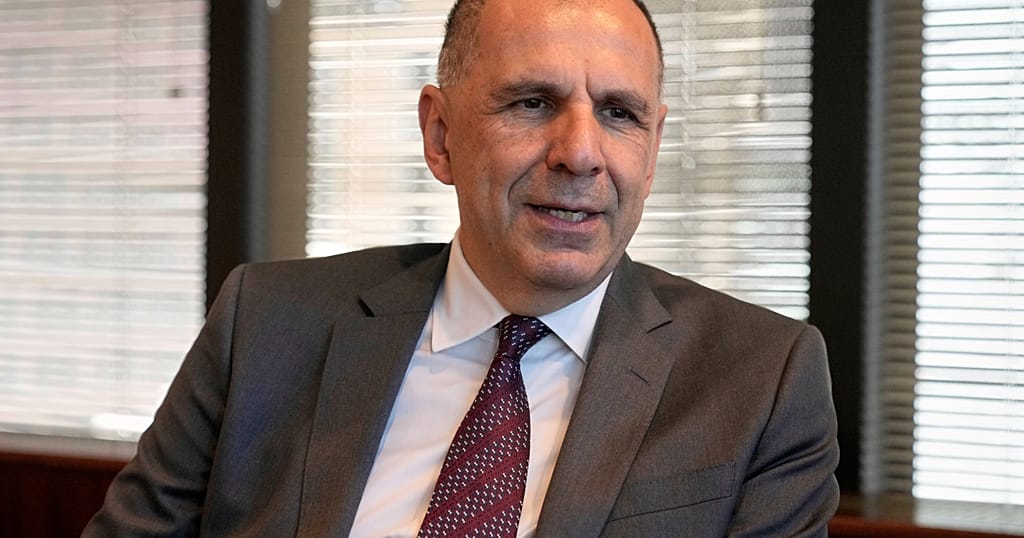
Greek Foreign Minister Giorgos Gerapetritis arrived in Tripoli on Monday for high‑level talks with his Libyan counterpart, Minister of Foreign Affairs Taher al‑Baour, marking a renewed diplomatic push on migration, security and economic cooperation between the two Mediterranean states.
The primary agenda item was the sharp increase in irregular migration from eastern Libya to Greece. Athens has called on Tripoli to strengthen its capacity to intercept and return migrants before they cross the Mediterranean, a demand that reflects growing pressure on Greece’s southern border. Both ministers underscored the need for a “comprehensive approach” that combines burden‑sharing, enhanced security measures and joint training programmes for border officials, according to statements from Libyan authorities.
In addition to migration, the ministers explored ways to deepen collaboration in strategic sectors such as energy, infrastructure and maritime transport. Al‑Baour told reporters that the meeting also covered “numerous aspects of economic cooperation” and resulted in an agreement to organise reciprocal visits by Greek and Libyan business delegations. The aim, he said, is to create a sustainable partnership that enables private‑sector actors to engage directly in joint projects.
Gerapetritis also met with Abdulhamid Dbeibah, head of Libya’s internationally recognised Government of National Unity. The encounter highlighted the broader context of bilateral relations, which have been strained by a dispute over the demarcation of maritime boundaries in the energy‑rich waters south of the island of Crete. Both parties reiterated their commitment to resolving the issue through constructive dialogue in accordance with international law.
The talks come at a time when migration flows across the central Mediterranean have surged, prompting the European Union to seek greater cooperation with North African partners. Greece, which has implemented stricter asylum procedures and increased patrols in its waters, views Libya’s role in intercepting migrant vessels as critical to curbing arrivals. Libya, meanwhile, faces its own challenges in maintaining border control amid ongoing political fragmentation and limited resources.
By agreeing to expand economic ties and coordinate migration management, the two governments aim to address immediate security concerns while laying the groundwork for longer‑term partnership in the region. Continued dialogue on maritime delimitation and joint investment in energy projects could further stabilise bilateral relations and contribute to broader Mediterranean stability.
The outcomes of Monday’s meetings signal a deliberate effort by Greece and Libya to align their strategic interests, with forthcoming business delegations expected to flesh out concrete cooperation plans. Future exchanges are likely to focus on operationalizing the agreed‑upon training programmes and establishing mechanisms for regular information sharing on migration and maritime security.



Comments are closed for this story.