
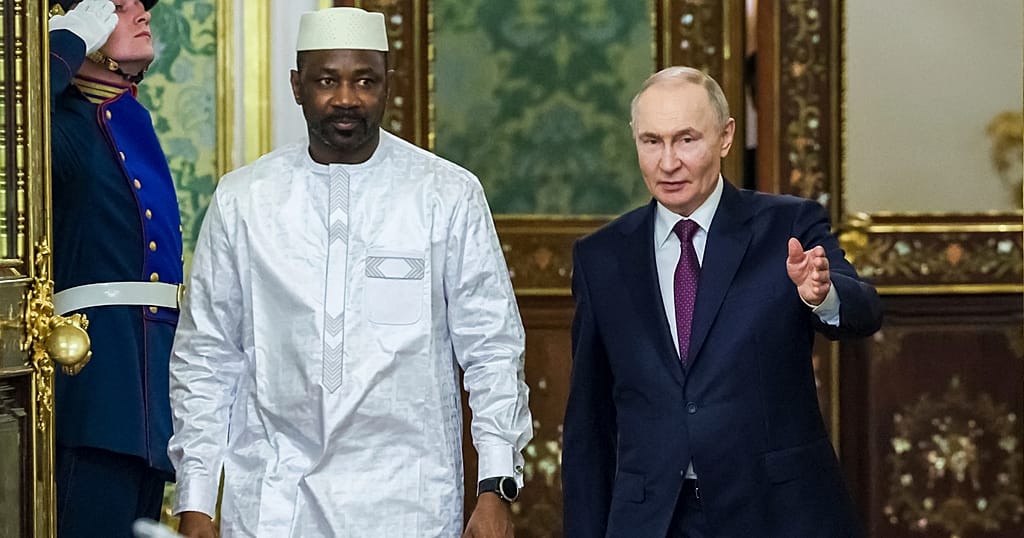
Russia has called on Mali to restore peace and stability quickly after a series of coordinated attacks by jihadist and separatist groups that triggered heavy fighting and the withdrawal of Russian‑backed forces from the northern town of Kidal.
Kremlin spokesman Dmitry Peskov said Moscow considers a swift return to a peaceful situation in Mali to be “important,” but he declined to confirm whether the Russian Africa Corps has sufficient troops on the ground to contain the crisis. The paramilitary unit, which supports the ruling junta, pulled back from Kidal following the weekend assaults on strategic positions previously held by the Moscow‑backed government.
The attacks, which took place simultaneously across several locations, resulted in the death of Mali’s Defence Minister Sadio Camara and forced Russian‑aligned forces to abandon their positions in Kidal. In a separate statement, Russia’s defence ministry warned that “the enemy has not abandoned its aggressive intentions and is regrouping,” describing the security situation in the Republic of Mali as “difficult.”
According to the defence ministry, Africa Corps units “continue to carry out their assigned missions and remain prepared to repel attacks by militants, conducting active reconnaissance and destroying … detected targets.” The statement underscored the Corps’ ongoing operational readiness despite the setbacks.
Attention is also turning to the whereabouts of Mali’s military leader, Assimi Goïta, who has not appeared publicly since the escalation of violence began. When asked about Goïta, Peskov replied that any information should be sought in Mali rather than from the Kremlin.
Analysts note that the recent wave of attacks represents one of the most serious security challenges Mali has faced in more than a decade, putting additional pressure on the junta that seized power in 2020. The instability threatens regional security and could affect ongoing foreign‑military cooperation, including Russia’s Africa Corps deployment.
The next steps for Mali’s authorities and their Russian partners remain uncertain. International observers are watching closely for any diplomatic engagement that could de‑escalate the conflict and restore stability to a country already grappling with political turmoil and insurgent activity.

Comments are closed for this story.