
Mali’s military ruler Assimi Goïta told the nation on Tuesday that security operations were “under control” after a wave of coordinated attacks over the weekend that temporarily destabilised the junta. The attacks, carried out by a joint force of jihadist militants and Tuareg separatists, struck several strategic points in the north and around the capital Bamako, killing at least 23 people, including Defence Minister Sadio Camara, a key architect of the regime’s realignment toward Russia.
Goïta, who had not spoken publicly for three days, appeared on state television to assure citizens that “security arrangements have been reinforced” and that “clearing operations, search efforts, intelligence gathering and security measures are continuing.” He urged Malians to reject division and panic, calling for national unity amid the crisis.
The weekend offensive marked the largest coordinated assault in Mali in nearly 15 years. Rebel forces targeted the Azawad Liberation Front (FLA) and the Al‑Qaeda‑linked Group for the Support of Islam and Muslims (JNIM), which joined forces against the junta and its Russian‑backed paramilitaries. After the attacks, Russia’s defence ministry said the rebels had captured the northern town of Kidal and were “regrouping.” It also confirmed that Russian mercenaries from the Africa Corps had withdrawn from Kidal under pressure.
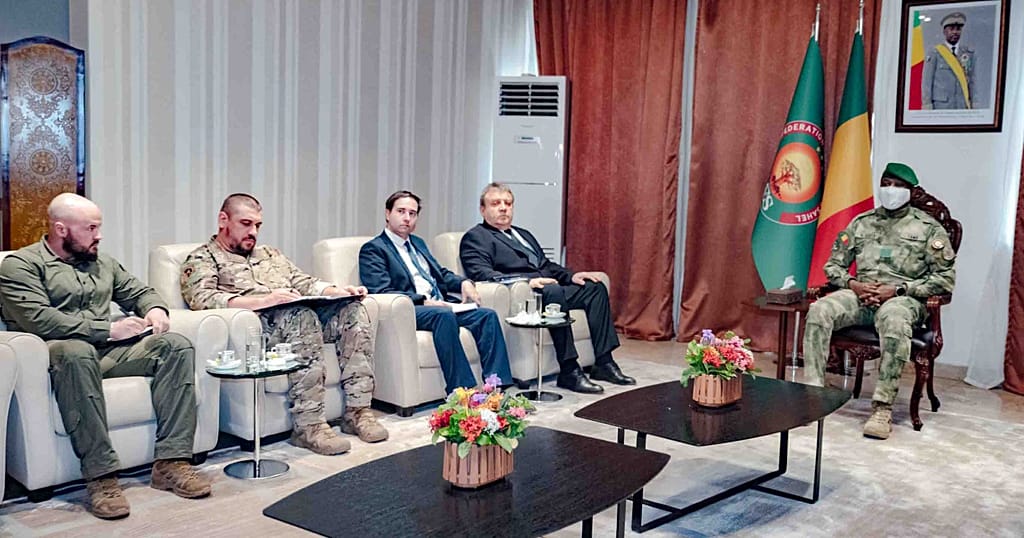
In the aftermath, Goïta’s office released photographs of the leader meeting injured soldiers, civilians and the Russian ambassador Igor Gromyko, who reiterated Russia’s commitment to support Mali’s fight against terrorism. The images were the first public appearance of Goïta since the assault began.
The conflict has prompted the Malian army to pull back from several positions in the Gao region, the second‑largest military hub after Kati, a garrison town near Bamako that was also hit during the weekend attacks. A JNIM spokesperson announced a blockade of roads leading to Bamako and Kati, warning that anyone attempting to breach it would face consequences, although AFP could not independently verify the blockade’s implementation.
Analysts note that the attacks may represent a tactical diversion aimed at seizing Kidal, a pro‑independence stronghold that had been under government control since a November 2023 offensive supported by Russian mercenaries. The current alliance between Tuareg rebels and jihadists echoes the 2012 crisis, when similar coalitions briefly captured northern cities before fracturing.
The developments raise questions about the junta’s capacity to contain the insurgency despite its claims that strengthened foreign partnerships and increased military activity have curbed the jihadist threat. International observers are watching closely as Mali confronts a renewed security challenge that threatens both domestic stability and regional security dynamics.

Comments are closed for this story.