
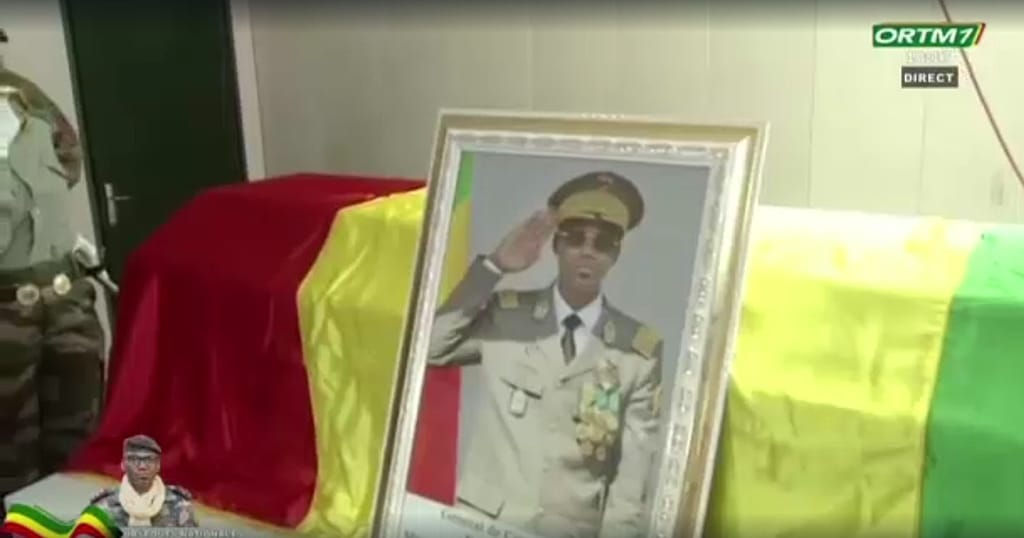
Thousands of Malians gathered in Bamako on Thursday to pay tribute to Defence Minister Sadio Camara, who was killed in a car‑bomb attack on his home in Kati on Saturday. The ceremony, held under heavy security, was attended by senior officials, foreign dignitaries and Camara’s relatives and friends.
The blast that killed Camara also claimed the lives of his wife and two grand‑daughters. The attack was part of a two‑day wave of coordinated strikes carried out by jihadist militants and their Tuareg separatist allies against military installations across the country. Official figures indicate that at least 23 civilians and soldiers have died in the recent violence, underscoring a deepening security crisis in the Sahel nation.
Junta leader Assimi Goïta, dressed in combat fatigues, bowed before Camara’s coffin as a sign of respect. The funeral service, scheduled for later on Thursday, was attended by defence ministers from neighbouring Niger and Burkina Faso, as well as other officials from Mali and abroad. The presence of numerous armed soldiers, checkpoints and barricades around the parade ground reflected the heightened security measures imposed for the event.
Camara was a senior figure within the military junta and played a key role in steering Mali’s strategic alignment with Russia in recent years. His death has prompted the government to declare two days of national mourning and to intensify security operations aimed at curbing the militant onslaught.
The attacks have exposed significant gaps in the country’s defence posture, prompting calls from regional partners for coordinated responses. While the junta has asserted that the situation is under control, analysts note that the incident may compel Mali to reassess its security partnerships and domestic counter‑terrorism strategies.
The funeral and the accompanying security measures illustrate the precarious environment in which Mali’s leadership operates. Further developments are expected as the government outlines steps to address the surge in militant activity and to restore stability in the region.




Comments are closed for this story.